Fertilizer Storage Conditions: Protect Your Fertilizer from Moisture, Caking and Accidents
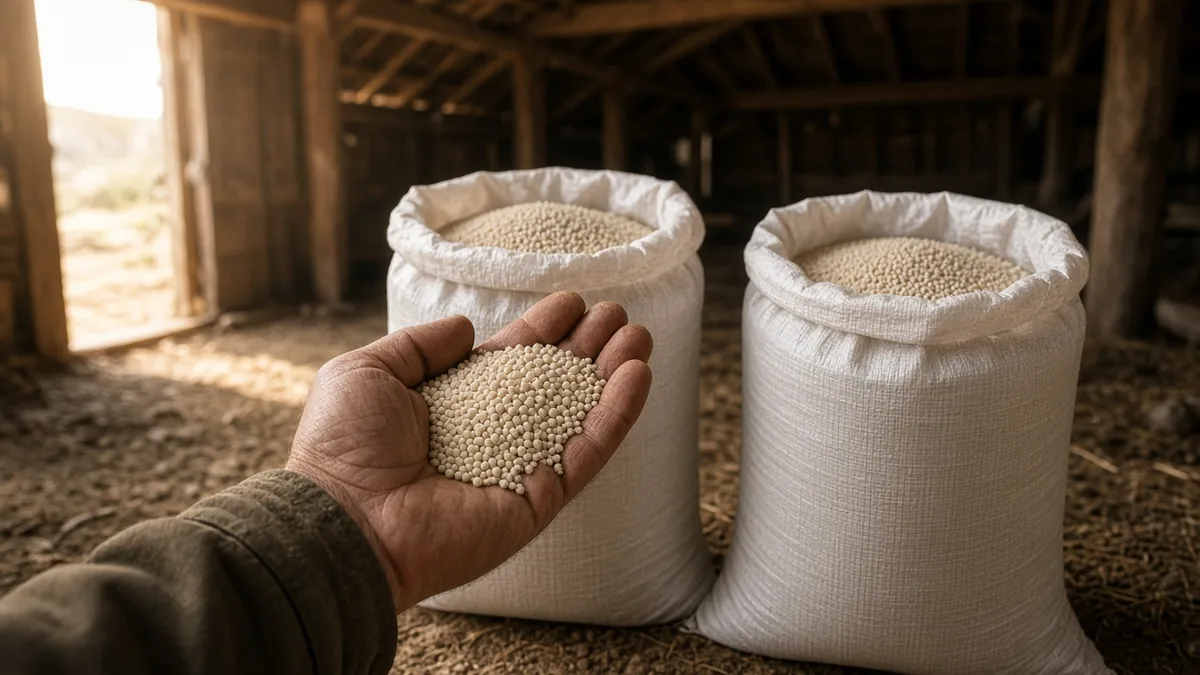
Short answer: Fertilizers should be stored in a dry, cool, well-ventilated enclosed area out of direct sunlight, on pallets so they do not touch the floor, a little away from the walls, with bags kept closed. Different fertilizers (especially urea and nitrate-containing fertilizers such as CAN) should be stacked separately without being mixed, and kept apart from seed, pesticides, food and animal feed. Liquid fertilizers and phosphoric acid should be stored in their original closed packaging, out of reach of children and protected from frost and sun.
Getting your fertilizer on time is as important as applying it to the field on time. But when fertilizer bought before the season sits for months in a barn, a hay loft or outdoors, it absorbs moisture, cakes as hard as stone and does not flow evenly from the spreader. The result: uneven distribution, a field growing in stripes and money wasted. Correct storage is especially important in the Black Sea region, where the air is humid all year round. In this guide we explain the basic rules of fertilizer storage and the points to watch for each type of fertilizer.
Why Does Correct Storage Matter?
- It preserves quality: Granules that absorb moisture stick together, cake and turn dusty. Fertilizer whose granule structure has broken down cannot be spread evenly.
- It prevents losses: Torn, wet or sun-exposed bags lead to product loss and damaged packaging.
- It ensures safety: Some fertilizers should not be kept together with flammable materials; liquid acids are corrosive.
- It protects the environment: Open heaps washed by rain can carry nutrients into streams and wells.
General Storage Rules
1. Choose a dry, well-ventilated place
Most mineral fertilizers absorb moisture from the air. The store should be an enclosed area with a roof that does not leak, a floor that does not take in water, and ventilation. Rather than keeping doors and windows open all the time on humid days, it is better to ventilate in dry weather.
2. Protect from direct sun and heat
Sunlight wears out plastic bags, and temperature swings cause condensation and caking inside the bag. Keep fertilizer away from sources of heat and sparks such as stoves, boilers and welding machines.
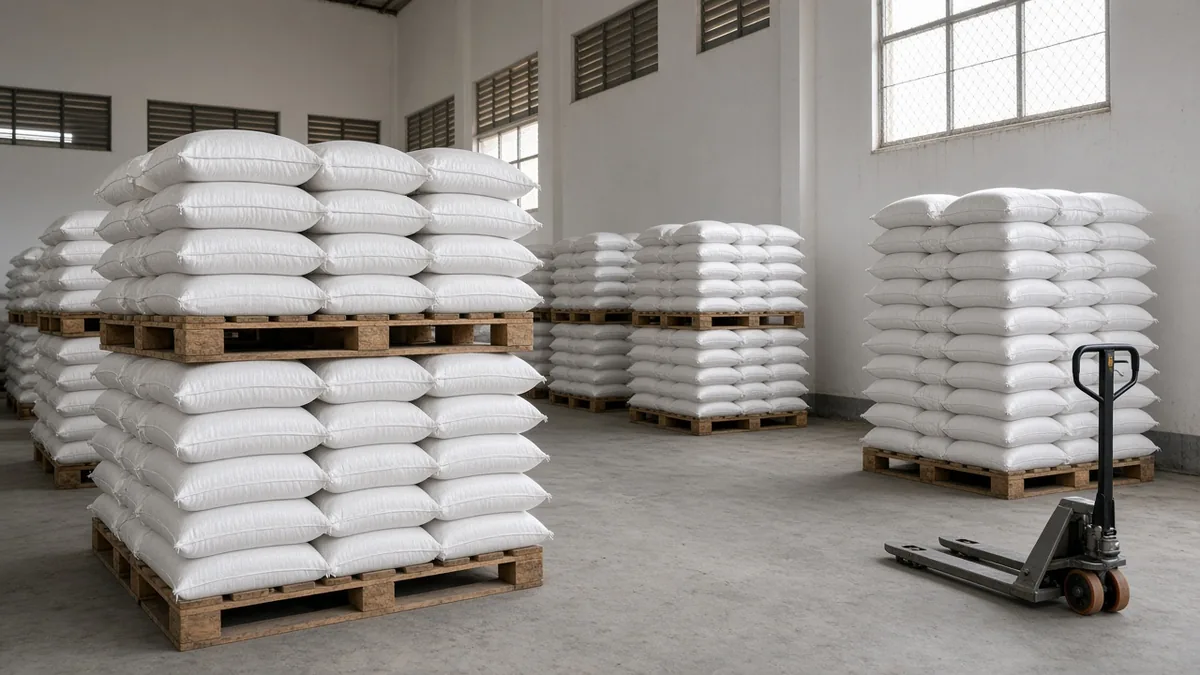
3. Use pallets; keep bags off the floor and walls
- Place bags on wooden or plastic pallets, not directly on concrete or earth floors.
- Build stacks a little away from the walls so that moisture and condensation from the wall do not reach the bags.
- Leave access aisles between stacks to make inspection, ventilation and handling easier.
4. Do not overdo stack height
Stacks that are too high cause pressure caking in the bottom bags and a risk of toppling. Keep stacks balanced, neat and at a height at which they will not topple; for big bags, follow the packaging manufacturer's recommendations on stacking.
5. Store different fertilizers separately
Stack each type of fertilizer separately and keep the labels visible. In particular:
- Do not leave urea and nitrate-containing fertilizers such as CAN mixed together; this mixture absorbs moisture very quickly and can turn into a wet, sticky mass. If they are to be mixed, do it in small amounts immediately before application.
- Keep fertilizer apart from seed, pesticides, food and animal feed.
6. Close opened bags
Tie the neck of a partly used bag tightly or transfer the contents to a container with a lid. A bag left open can absorb moisture within a few days.
7. Apply the "first in, first out" rule
Use the fertilizer bought first, first. Do not leave bags sitting in the store for years; plan your season according to need and avoid stocking more than necessary.
Points to Watch by Fertilizer Type
| Fertilizer type | Example products | Special care |
|---|---|---|
| Urea | Urea 46 | Absorbs moisture very easily; store in an enclosed, dry area in tightly closed bags |
| Nitrate-containing nitrogen | CAN 26 | Keep away from heat, sparks and flammable or organic materials such as fuel, oil and straw; do not leave mixed with urea |
| Sulphate fertilizers | Ammonium Sulphate, Potassium Sulphate | Can cake in humidity; can cause corrosion in prolonged contact with metal surfaces |
| Compound NPK | NPK 15-15-15+(20SO3)+ME, NPK 12-25-12+(15SO3)+ME | On pallets in a dry environment; avoid excessively high stacks |
| Potassium | Potassium Chloride | Can harden in humidity; its salty nature can wear metal equipment |
| Liquid nitrogen | UAN 32 + ME | In closed containers, away from the sun; protect from frost as it can crystallise in the cold |
| Liquid acid | Phosphoric Acid | Corrosive; keep in its original container, on an acid-resistant floor, away from children; handle with gloves and goggles |
| Soil conditioner | Humic Acid | In a dry, cool place, in closed packaging |
Storing Liquid Fertilizers and Acids
Liquid products carry different risks from granular fertilizers:
- Store them in their original packaging; never transfer them into containers that could be mistaken for something else, such as drinking water or PET bottles.
- Keep containers closed and upright; place a tray or bunded area underneath to catch leaks.
- Protect from freezing: In a cold store some liquid fertilizers can crystallise and block the dosing pump.
- Keep acids such as phosphoric acid apart from alkaline substances, metal containers and other chemicals. Wear protective gloves and goggles when handling and diluting; when diluting, always add the acid to the water, never pour water onto the acid.
Temporary Storage in the Field
Sometimes fertilizer has to wait in the field for a few days. In that case:
- Place the bags on pallets or dry ground; do not leave them directly on the soil.
- Cover them with a waterproof tarpaulin and secure it so it will not blow open in the wind.
- Do not stack near streams, wells or water channels.
- Keep the waiting time as short as possible.
Can Caked Fertilizer Be Used?
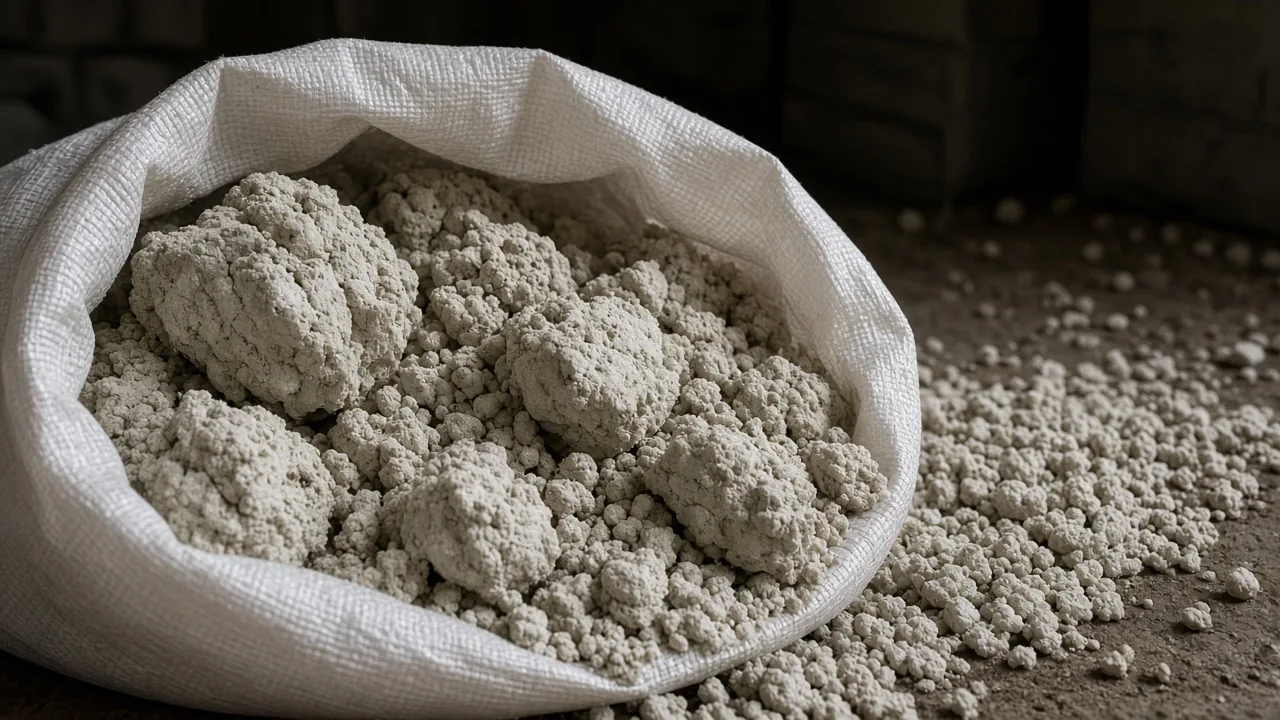
Light caking usually does not change the product's nutrient content, but it does spoil spreading uniformity. Light lumps can be crushed and used. Fertilizer that has set hard like stone, has got wet and run, or is contaminated with foreign matter will be distributed very unevenly; in that case, consult your dealer or supplier. Remember, the best solution is to prevent caking in the first place.
Safety Checklist
- Is the store locked and out of reach of children and animals?
- Is the fertilizer kept apart from fuel, oil, straw and other flammable materials?
- Are product labels and safety information legible? For how to read the label, see our article How to Read a Fertilizer Label.
- Are gloves, goggles and clean water at hand for acids and liquid products?
- Are spills swept up and cleaned immediately?
Correct Storage Starts with Correct Planning
The best way to avoid keeping more fertilizer in store than necessary is to calculate your needs accurately in advance. Determining how much fertilizer is needed from the results of a soil analysis and planning purchases according to the application calendar reduces both storage risk and cost. Application times for hazelnut and tea growers are covered in our articles Hazelnut Fertilization Calendar and Tea Garden Fertilization Guide.
Conclusion
When stored correctly, fertilizer reaches the field in the same condition as the day it left the bag. A dry, well-ventilated store, pallets, neat stacking, separate storage by type and basic safety precautions for liquid products protect both your fertilizer and your family.
Let us plan your season and delivery times together. With AKFE Gübre, receive just the quantity you need at the right time for your application period; delivery to all 81 provinces of Turkey — contact and quotes: +90 462 325 05 41 / +90 531 474 78 85, satis@akfe.com.tr.
Frequently Asked Questions
How should fertilizer be stored?
Fertilizer should be stored in a dry, cool, well-ventilated enclosed area out of the sun, on pallets, a little away from the walls and in closed bags. Different types of fertilizer should be stacked separately and kept apart from seed, pesticides, food and feed.
Why does fertilizer cake?
Fertilizers absorb moisture from the air; moisture, temperature swings and the pressure of high stacks cause the granules to stick together. A dry store, pallets, a reasonable stack height and closed bags largely prevent caking.
Can urea and CAN be stored in the same place?
They can be kept in the same store in separate stacks, but they should not be left mixed together. A mixture of urea and nitrate-containing fertilizers absorbs moisture very quickly and can turn into a sticky mass.
Can caked fertilizer be used?
Lightly caked fertilizer can be crushed and used; caking usually affects spreading uniformity rather than nutrient content. With fertilizer that has set hard or got wet and run, distribution will be uneven, so the supplier should be consulted.
Can fertilizer be left outdoors?
It should not be left outdoors for long. When unavoidable, it should be kept for a short time on pallets, covered with a waterproof tarpaulin and away from water sources such as streams and wells.
How should liquid fertilizer and phosphoric acid be stored?
In their original, closed packaging, upright, protected from sun and frost and out of reach of children. Phosphoric acid is corrosive; it should be handled with gloves and goggles and kept apart from other chemicals.