Yield-Boosting Fertilization Techniques for Wheat: A Stage-by-Stage Guide from Sowing to Heading
Short answer: Wheat is usually fertilized in two stages: a basal fertilizer at sowing (phosphorus-rich, e.g. DAP 18-46-0 or NP/NPK depending on the analysis) and split nitrogen top-dressing in spring (urea, CAN or ammonium sulphate at tillering and stem elongation). In irrigated areas, or in years with sufficient moisture, additional nitrogen before heading can support grain protein. On the calcareous soils of Central Anatolia, zinc deficiency, and in some areas sulphur deficiency, can limit yield. Rates should be determined according to the region, rainfall and soil analysis.
Wheat is the field crop grown on the largest area in Turkey; it is sown under very different conditions, from Thrace to Central Anatolia, and from the Southeast to the inland parts of the Black Sea region. This diversity means there can be no "single wheat fertilizer programme". Still, the basic logic of a good programme is the same everywhere: phosphorus to the roots at sowing, nitrogen close to the time of need and in split doses. In this guide we explain the fertilization steps according to wheat's growth stages.
Nutrient Requirements of Wheat
| Nutrient | Role in wheat | When is it critical? |
|---|---|---|
| Nitrogen (N) | Tillering, number of ears, grain filling and protein | Tillering, stem elongation, before heading |
| Phosphorus (P) | Root development, winter hardiness, early growth | Sowing and emergence |
| Potassium (K) | Stem strength, water balance, disease resistance | At sowing if low in the soil |
| Sulphur (S) | Protein synthesis, efficient use of nitrogen | Spring growth period |
| Zinc (Zn) | Growth and yield; deficiency is common on calcareous soils | Early growth stage |
For the role of nitrogen in the plant and the ways it is lost, see our article The Importance of Nitrogen Fertilizers in Agriculture.
Before Fertilizing: Soil Analysis
The most common mistake in wheat fields is applying the same fertilizer at the same rate every year. Yet the previous crop (fallow, legumes, sunflower, maize), soil texture, lime status and phosphorus-potassium levels can change the programme completely. Having a soil analysis done after harvest and before sowing both avoids unnecessary costs and reveals deficiencies. For the effect of calcareous, high-pH soils on phosphorus and zinc uptake, see our article Soil pH and Fertilizer Efficiency.
Stage 1: Basal Fertilizer at Sowing (Autumn)
Phosphorus moves very little in the soil, so it should be applied at sowing, into the root zone. A strong root system directly affects wheat's winter hardiness and its growth in spring.
Options that can be considered depending on the analysis:
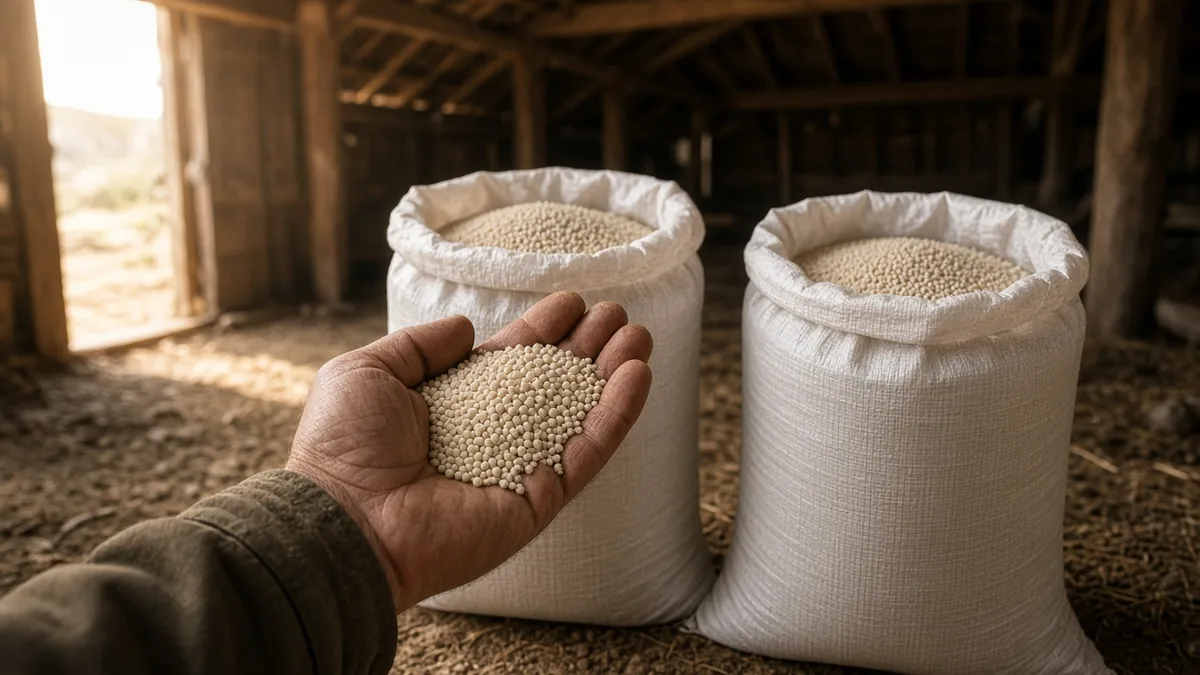
- Phosphorus low, potassium sufficient: DAP 18-46-0 — general rate range on the product page: 15–25 kg/da.
- If a nitrogen-phosphorus balance and added sulphur are wanted: NP 20-20-0+(12SO3)+ME.
- If potassium is also low or there is a risk of zinc deficiency: NPK 15-15-15+(20SO3)+ME (contains 1% Zn) or NPK 15-15-15+(15SO3)+ME — the latter has a general rate range of 30–50 kg/da on its product page.
Application tips:
- Where possible, use a combined seed and fertilizer drill to place the fertilizer beside or slightly below the seed. Fertilizer in direct contact with the seed can damage germination.
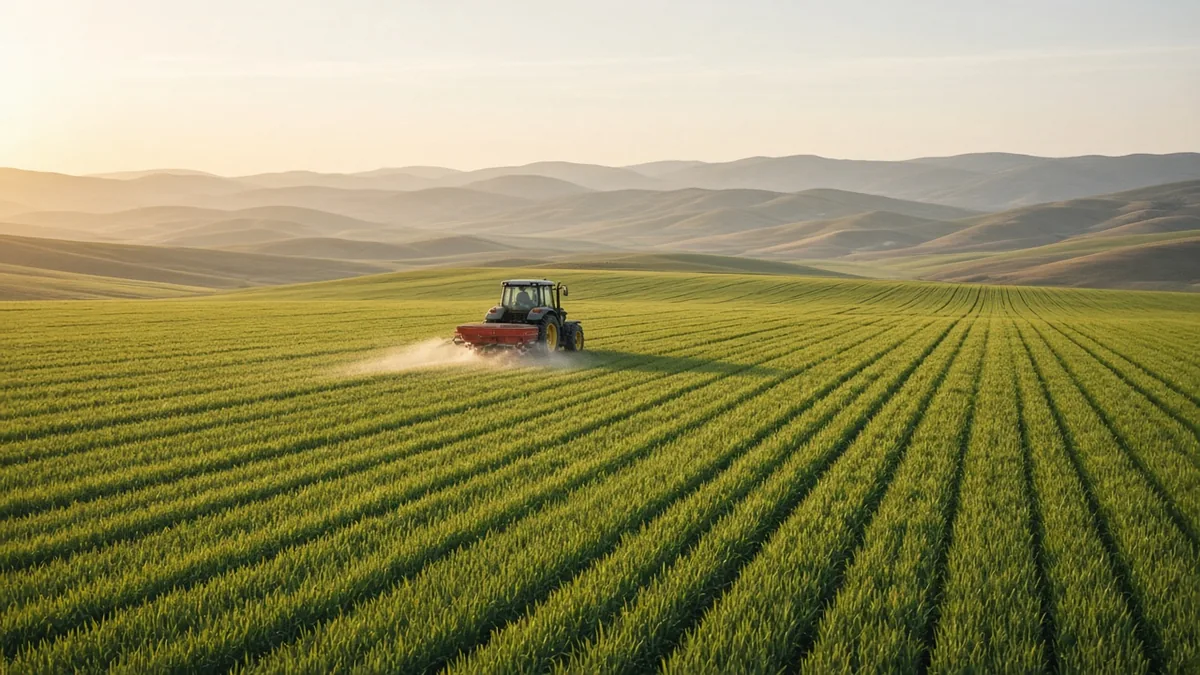
- If broadcasting, spread the fertilizer just before sowing and incorporate it into the soil.
- Nitrogen applied with the basal fertilizer supports the plant going into winter; but because of the risk of leaching over winter, most of the nitrogen is left for spring.
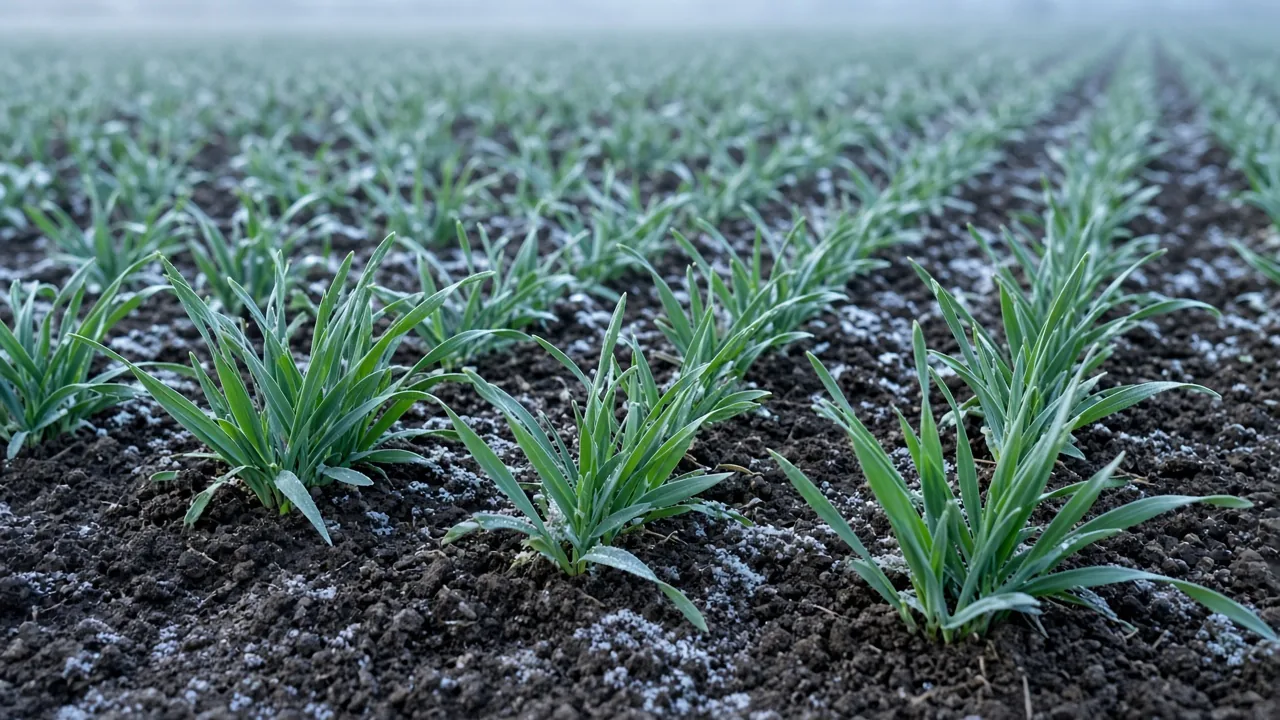
Stage 2: Nitrogen at Tillering (Late Winter – Early Spring)
Tillering is the stage at which wheat's number of ears is determined. Nitrogen applied at this stage supports a healthy number of tillers and therefore yield. Depending on the region it usually falls in February–March; it is applied when the soil is workable and the plants are starting to wake up.
- Urea 46: An economical nitrogen source; general rate range on the product page: 15–25 kg/da. Timing it before rain reduces volatilisation losses.
- Ammonium Sulphate: On calcareous soils and in areas with sulphur deficiency; general rate range on the product page: 25–40 kg/da.
- CAN 26: Where fast action is wanted and on acidic soils; general rate range on the product page: 20–35 kg/da.
Stage 3: Nitrogen at Stem Elongation (Spring)
With stem elongation, wheat's nitrogen demand rises rapidly. Leaving part of the total nitrogen for this stage supports ear development and grain number. Because of its fast action, CAN 26 or, if moisture is sufficient, urea can be preferred at this stage.
Stage 4: Nitrogen Before Heading (Optional)
A nitrogen application between flag leaf and heading can support grain protein content in particular. However, this application:
- Makes sense in irrigated areas or in years with sufficient spring rainfall,
- May not be economical in dry conditions, as nitrogen applied to the soil may not be taken up,
- Should be done with care in fields that are already very lush and at high risk of lodging.
In irrigated areas, liquid UAN 32 + ME can also be applied through a sprinkler system (general rate range on the product page: 5–10 L/da); appropriate dilution is essential for foliar application.
Summary Fertilization Calendar
| Stage | Purpose | Options (depending on analysis) | Product page rate range |
|---|---|---|---|
| Sowing (autumn) | Root development, phosphorus | DAP 18-46-0, NP 20-20-0+(12SO3)+ME, NPK 15-15-15+ME | DAP: 15–25 kg/da; NPK 15-15-15+(15SO3)+ME: 30–50 kg/da |
| Tillering | Number of ears | Urea 46, Ammonium Sulphate, CAN 26 | Urea: 15–25; AS: 25–40; CAN: 20–35 kg/da |
| Stem elongation | Ear development | CAN 26, Urea 46 | CAN: 20–35; Urea: 15–25 kg/da |
| Before heading (optional) | Grain filling, protein | CAN 26, UAN 32 + ME (in irrigated areas) | UAN: 5–10 L/da |
Important: The ranges in the table are the general ranges on AKFE product pages; it is not necessary to apply the full range at every stage. The total amount of nitrogen is first determined according to the analysis, the region and the expected yield, and then divided across the stages. To convert the amount of product in the bag into pure nitrogen, see the calculation examples in our article How to Read a Fertilizer Label.
Dryland vs Irrigated Farming
- Dryland (rain-fed) farming: Rainfall determines the yield potential. The nitrogen rate should be kept more moderate, and top-dressing should be timed before rain where possible. In dry years, excess nitrogen can lead to lush early growth followed by water stress.
- Irrigated farming: The yield potential is higher; nitrogen can be divided into more splits, and an application before heading becomes more worthwhile.
Micronutrients and Sulphur
- Zinc: Zinc deficiency is a well-known problem on the calcareous, high-pH soils of Central Anatolia. If the analysis shows low zinc, zinc-containing basal fertilizers or foliar applications on expert advice can be considered.
- Sulphur: With sulphur deficiency, yellowing starts on the young leaves and can be confused with nitrogen deficiency. Basal fertilizers containing SO3, or ammonium sulphate, help meet the sulphur requirement.
Common Mistakes
- Applying all the nitrogen at sowing (risk of loss over winter)
- Applying the same programme every year without a soil analysis
- Spreading urea on the surface in dry, hot weather and leaving it there
- Putting fertilizer in the drill in a way that brings it into direct contact with the seed
- Applying more nitrogen than necessary in dry years
- Working without calibrating the spreader (striped growth)
Conclusion
Efficient fertilization of wheat means placing phosphorus at the roots at sowing, splitting nitrogen across tillering and stem elongation, not neglecting sulphur and zinc, and adjusting all of this to the soil analysis and rainfall conditions. The same logic largely applies to barley and other cereals. For general criteria on choosing fertilizer, see also our article 10 Key Points to Consider When Choosing Fertilizer.
Let us plan the basal and top-dressing needs of your wheat field together. Get a quote from AKFE Gübre for the products and quantities that match your analysis results; delivery to all 81 provinces of Turkey — contact: +90 462 325 05 41 / +90 531 474 78 85, satis@akfe.com.tr.
Frequently Asked Questions
When should wheat be fertilized?
In wheat, a phosphorus-rich basal fertilizer is applied at sowing. Nitrogen top-dressing is applied in spring, split between tillering and stem elongation. In irrigated areas, additional nitrogen can be applied before heading.
What is the best basal fertilizer for wheat?
If phosphorus is low and potassium is sufficient, DAP 18-46-0 is a common choice. If added sulphur is wanted, NP 20-20-0+(12SO3)+ME, and if potassium is also low or there is a zinc risk, NPK 15-15-15+ME-type fertilizers can be considered. The choice should be based on soil analysis.
Which fertilizer is applied to wheat at tillering?
Nitrogen fertilizers are used at tillering: urea as the economical option, ammonium sulphate on calcareous and sulphur-deficient soils, and CAN 26 where fast action is wanted and on acidic soils.
How many kilos of fertilizer per decare should be applied to wheat?
It varies with the region, rainfall, previous crop and soil analysis. The general ranges on AKFE product pages are 15–25 kg/da for DAP, 15–25 kg/da for urea and 20–35 kg/da for CAN 26; the total nitrogen should be determined by analysis and divided across the stages.
How can zinc deficiency in wheat be recognised?
With zinc deficiency, growth is set back and pale spots and stripes can appear on the leaves. It is more common on calcareous, high-pH soils. For a definite diagnosis, a soil analysis and, if necessary, a leaf analysis should be carried out.
Is nitrogen applied to wheat in dryland farming?
Yes, but the rate should be kept more moderate and top-dressing should be timed before rain where possible. In dry years, excess nitrogen may not be economical and can make the crop more vulnerable to water stress.