The Relationship Between Soil pH and Fertilizer Efficiency: Correct Fertilization on Acidic and Calcareous Soils
Short answer: Soil pH determines how much of the nutrients applied with fertilizer the plant can actually take up. For most crops, nutrient availability is most balanced between slightly acidic and neutral (about pH 6.0–7.5). In strongly acidic soils, phosphorus becomes fixed, calcium and magnesium decline, and aluminium and manganese can reach harmful levels; in calcareous (alkaline) soils, uptake of phosphorus, iron, zinc and manganese becomes difficult. Fertilizer should therefore be chosen according to the pH value in the soil analysis, and acidic soils should be limed based on analysis where necessary.
It often seems surprising when one of two neighbours applying the same fertilizer at the same rate gets good results and the other does not. One of the most important reasons behind this difference is soil pH. In Turkey the issue appears at two opposite extremes: the high-rainfall hazelnut and tea areas of the Black Sea region generally have acidic soils, while calcareous and alkaline soils are common in Central Anatolia and many dry regions. In this article we explain how pH affects fertilizer efficiency and what approach can be taken in each case.
What Is Soil pH?
Soil pH indicates the degree of acidity or basicity (alkalinity) of the soil and is expressed on a scale of 0–14. 7 is neutral; below 7 the soil is acidic, above 7 it is basic (alkaline). pH is a logarithmic scale: a soil with pH 5 is about 10 times more acidic than a soil with pH 6. That is why even a small-looking difference in pH can make a big difference to nutrient uptake.
Soil pH classes (general)
| pH range | Class | Where it is common in Turkey (general) |
|---|---|---|
| Below 5.5 | Acidic – strongly acidic | High-rainfall tea and hazelnut areas of the Black Sea region |
| 5.5–6.5 | Slightly acidic | Some coastal and hillside orchards in the Black Sea region |
| 6.5–7.5 | Neutral | Many field and orchard soils |
| 7.5–8.5 | Slightly alkaline – calcareous | Central Anatolia, the Southeast and many dry regions |
| Above 8.5 | Strongly alkaline | Problem soils that may be affected by sodium |
The threshold values in the table may vary slightly depending on the laboratory and classification system; base your own assessment on your analysis report.
How Does pH Affect Nutrient Uptake?
| Nutrient | In acidic soil (low pH) | In calcareous soil (high pH) |
|---|---|---|
| Nitrogen | Microbial conversions may slow down | Volatilisation losses increase if urea stays on the surface |
| Phosphorus | Fixed by iron and aluminium; uptake falls | Fixed by calcium; uptake falls |
| Potassium | Prone to leaching in high-rainfall areas | Generally available; depends on analysis |
| Calcium, magnesium | Increased risk of deficiency | Generally sufficient |
| Iron, manganese, zinc, copper | Available; manganese and aluminium can reach harmful levels | Uptake falls; iron and zinc deficiencies are common |
| Boron | Can be leached from high-rainfall acidic soils | Uptake may fall at high pH |
| Molybdenum | Uptake falls | Uptake increases |
The most important conclusion is this: phosphorus becomes fixed at both extremes. So on neither strongly acidic nor strongly calcareous soils can the plant make use of all the phosphate fertilizer applied. Moving pH towards a balanced range and applying phosphorus to the root zone at the right time increases fertilizer efficiency.
Crop pH Preferences
- Tea: Likes acidic soil, but excessive acidity can also reduce yield. Details: Tea Garden Fertilization Guide.
- Hazelnut: Can grow across a wide pH range, but phosphorus and calcium uptake can be a problem on strongly acidic soils. See Hazelnut Fertilization Calendar.
- Cereals, maize, sunflower, vegetables: Generally between slightly acidic and slightly alkaline.
- Vineyards and citrus: On calcareous soils, watch out for iron deficiency (yellowing between the veins while the veins stay green).
The Effect of Fertilizers on Soil pH
Fertilizers do not only supply nutrients; in the long term they can also affect soil pH:
| Fertilizer | Effect on pH | What it means in practice |
|---|---|---|
| Ammonium Sulphate | Markedly acidifying | An advantage on calcareous soils; pH monitoring essential on acidic soils |
| Urea 46 | Slightly acidifying in the long term | Should be incorporated into the soil on calcareous soils (volatilisation loss) |
| CAN 26 | Low; contains calcium | Often preferred on acidic soils, e.g. for hazelnut |
| Potassium Sulphate | No marked effect | Chloride-free potassium, added sulphur |
| Phosphoric Acid | Lowers irrigation water pH | Phosphorus in fertigation + preventing lime build-up in drip lines |
For a comparison of different nitrogen fertilizers, see our article Nitrogen Fertilizers: Types and Uses.
What to Do on Acidic Soils
- Liming: The pH of acidic soils can be raised by applying lime (calcium carbonate). Dolomitic lime supplies magnesium as well as calcium. The amount of lime must be determined according to the lime requirement in the soil analysis; too much lime also upsets the nutrient balance. Lime is more effective when incorporated into the soil, and its effect develops over time.
- Do not apply lime and nitrogen fertilizer at the same time: Especially if ammonium-containing fertilizers are applied to the surface together with lime, nitrogen losses can increase; leaving time between them is recommended.
- Fertilizer choice: Fertilizers with a low acidifying effect that contain calcium (e.g. CAN 26) can be preferred; ammonium sulphate should be used with pH monitoring.
- Apply phosphorus correctly: When phosphate fertilizers are applied close to the roots, fixation is reduced. In hazelnut, phosphorus-rich fertilizers such as NPK 12-25-12+(15SO3)+ME are considered for the post-harvest period.
- Organic matter: Organic matter increases the soil's buffering capacity against changes in pH. Soil conditioners such as Humic Acid can support the programme (general rate range on the product page: 2–4 kg/da).
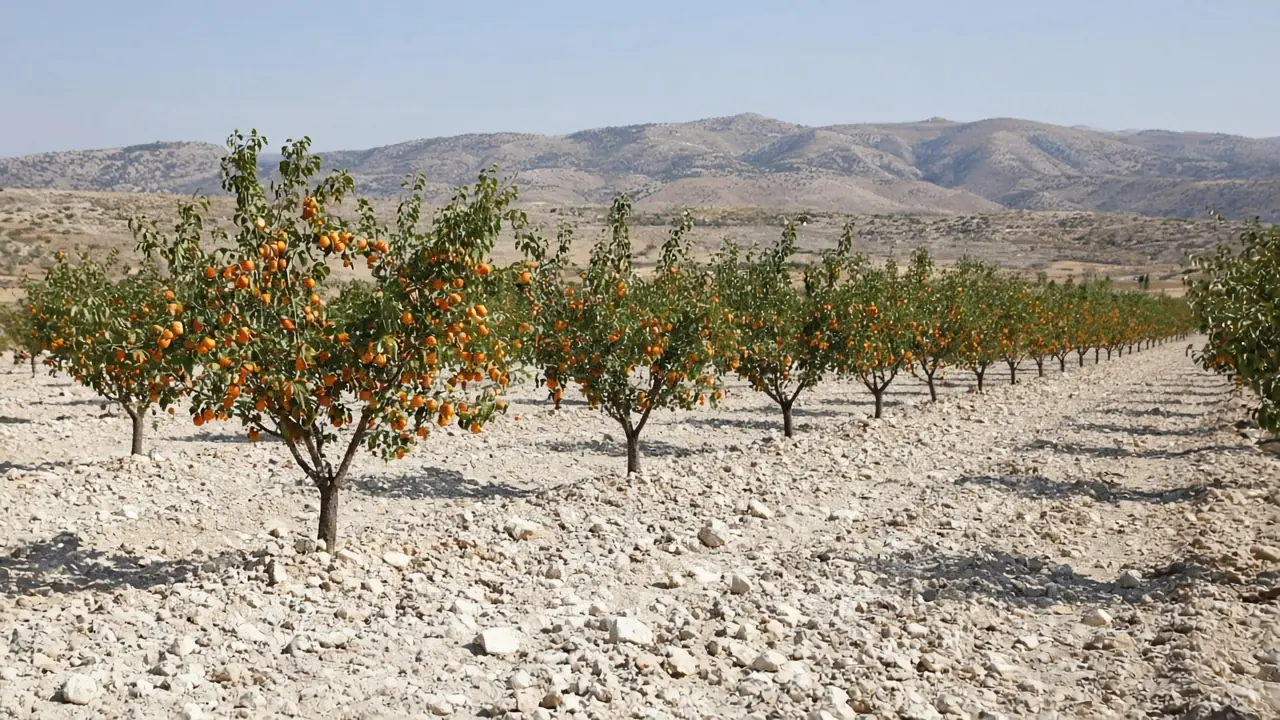
What to Do on Calcareous (Alkaline) Soils
Permanently lowering the pH of calcareous soils at field scale is often neither practical nor economical, because the abundant lime in the soil buffers the pH. The aim is therefore not to "change" the pH but to increase fertilizer efficiency:
- Sulphur- and ammonium-containing fertilizers: Ammonium sulphate and compound fertilizers containing SO3 (e.g. NPK 15-15-15+(20SO3)+ME) can be locally beneficial around the roots.
- Band-place phosphorus: Phosphorus placed beside/below the seed at sowing can be used more efficiently than broadcast phosphorus.
- Watch zinc and iron: If the analysis shows a deficiency, fertilizers containing micronutrients or foliar applications on expert advice are considered. For zinc in wheat, see Wheat Fertilization Techniques.
- Incorporate urea into the soil: At high pH, ammonia losses from urea left on the surface increase.
- In drip irrigation: Acidic products such as phosphoric acid lower the pH of the irrigation water, supplying phosphorus and helping to reduce lime build-up in the lines; they must always be used diluted and with protective equipment.
How Is pH Measured?
The most reliable method is laboratory analysis of a correctly taken sample. For the sampling steps, see our article How to Do a Soil Analysis. Pocket pH meters used in the field can give a quick indication, but uncalibrated devices can give misleading results, so a laboratory result should be the basis for decisions. It is generally recommended to monitor pH every 2–3 years, and more often in areas that have been limed or where ammonium fertilizers are used intensively.
Conclusion
Soil pH is the "key that opens the door" for fertilizer: if the pH is not right, even the highest-quality fertilizer cannot have its full effect. On acidic soils, liming based on analysis and calcium-containing fertilizers, and on calcareous soils, sulphur-containing fertilizers, band-placed phosphorus and micronutrient monitoring increase fertilizer efficiency. In every case, the first step is an up-to-date soil analysis.
Let us build a fertilizer programme suited to your soil's pH together. Share your analysis report with the AKFE Gübre technical team and get a quote for suitable products and quantities. Delivery to all 81 provinces of Turkey — contact: +90 462 325 05 41 / +90 531 474 78 85, satis@akfe.com.tr.
Frequently Asked Questions
What should soil pH be?
For most crops, nutrient availability is most balanced at about pH 6.0–7.5. However, crops that like acidic soil, such as tea, are an exception. The target value varies by crop and should be assessed together with a soil analysis.
How does soil pH affect fertilizer efficiency?
pH determines whether nutrients are in a form the plant can take up. Phosphorus becomes fixed in strongly acidic and strongly calcareous soils; iron and zinc uptake becomes difficult in calcareous soils, and calcium and magnesium uptake in acidic soils. That is why the same fertilizer gives different results at different pH levels.
How can acidic soil be corrected?
The pH of acidic soils can be raised by applying lime or dolomitic lime. The amount of lime should be determined according to the lime requirement in the soil analysis; the lime should be incorporated into the soil and not applied at the same time as nitrogen fertilizers.
Which fertilizer should be used on calcareous soil?
On calcareous soils, sulphur- and ammonium-containing fertilizers such as ammonium sulphate, compound fertilizers containing SO3 and products containing micronutrients such as zinc and iron come to the fore. Band placement of phosphorus and incorporation of urea into the soil also increase efficiency.
Does ammonium sulphate acidify the soil?
Yes, ammonium sulphate markedly acidifies the soil. While this is an advantage on calcareous soils, continuous high-rate use on the already acidic soils of the Black Sea region can lower pH further; pH monitoring is recommended.
How often should soil pH be measured?
It is generally recommended every 2–3 years. More frequent monitoring is useful in areas that have been limed, where ammonium fertilizers are used intensively, or where production is intensive, such as greenhouses.