Nitrogen Fertilizers: Types and Uses – Comparing Urea, CAN, Ammonium Sulphate and UAN
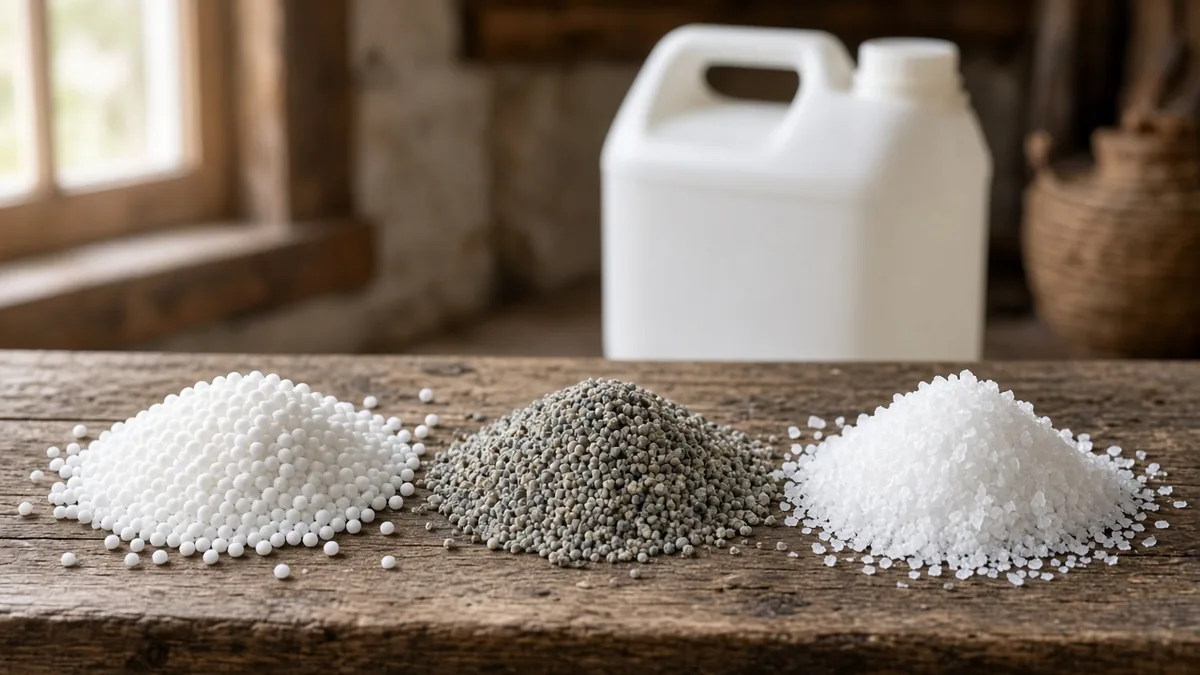
Short answer: The most common nitrogen fertilizers are Urea (46% N), CAN 26 (26% N, 8% CaO), Ammonium Sulphate (21% N, 24% S) and liquid UAN 32 (32% N). Urea has the highest nitrogen content and is usually economical, but volatilisation losses can occur if it is not incorporated into the soil. CAN is fast-acting and, because it contains calcium, has an advantage on acidic soils (e.g. Black Sea hazelnut orchards). Ammonium sulphate also supplies sulphur and acidifies the soil; it stands out on calcareous soils and in tea. UAN 32 is suitable for drip irrigation and greenhouses. Choose according to the crop, soil pH and application method.
In our article The Importance of Nitrogen Fertilizers in Agriculture we explained why nitrogen is so important for plants. In this article we focus on the practical question: Which nitrogen fertilizer should I use, on which crop and on which soil? Nitrogen fertilizers differ not only in how much nitrogen they contain, but also in the form of the nitrogen, the accompanying nutrient (calcium, sulphur) and their effect on the soil.
Why Do Nitrogen Forms Matter?
Nitrogen fertilizers carry nitrogen in different chemical forms, and this determines how fast the fertilizer acts and its risk of loss:
- Nitrate nitrogen: Taken up by the plant immediately and fast-acting; but it moves easily with water and can be leached.
- Ammonium nitrogen: Held by soil particles and leached more slowly; gradually converts to nitrate. It has an acidifying effect on the soil.
- Urea (amide) nitrogen: First converts to ammonium in the soil. If it stays on the surface, it can be lost to the air as ammonia.
Urea (46% N)
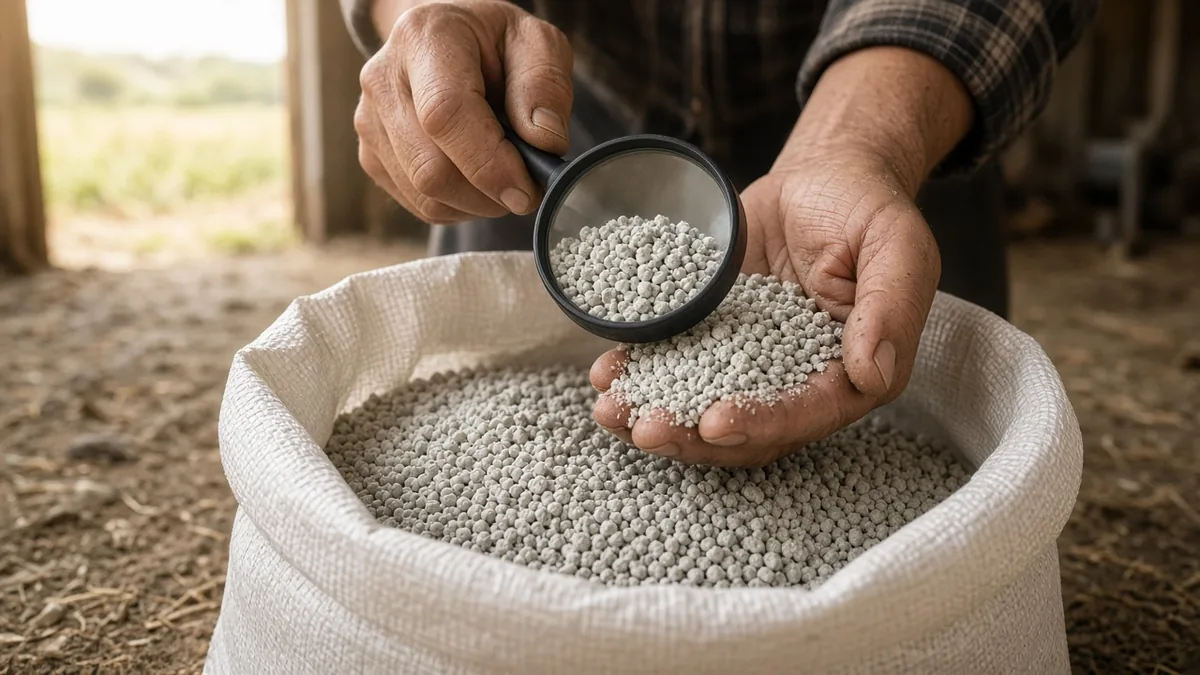
Urea 46 is one of the solid fertilizers with the highest nitrogen content. Because it is usually economical per unit of nitrogen, it is the most widely used nitrogen fertilizer.
- Uses: As a top-dressing for maize, wheat, barley, rice, hazelnut, fruit, vegetables and turf.
- Advantages: High nitrogen content, usually low cost per unit of nitrogen, less volume to transport and store.
- Caution: If left on the soil surface, ammonia losses increase, especially in hot, windy weather and on calcareous soils. It is recommended to incorporate it into the soil after application or to time it just before light rain or irrigation. It absorbs moisture easily and should be stored dry.
- General rate range on the product page: 15–25 kg/da; splitting the nitrogen rate is recommended.
CAN 26 – Calcium Ammonium Nitrate (26% N, 8% CaO)
CAN 26 contains its nitrogen half in ammonium and half in nitrate form. The nitrate part acts quickly, while the ammonium part sustains the effect for some time. Thanks to its calcium content, its acidifying effect on the soil is low.
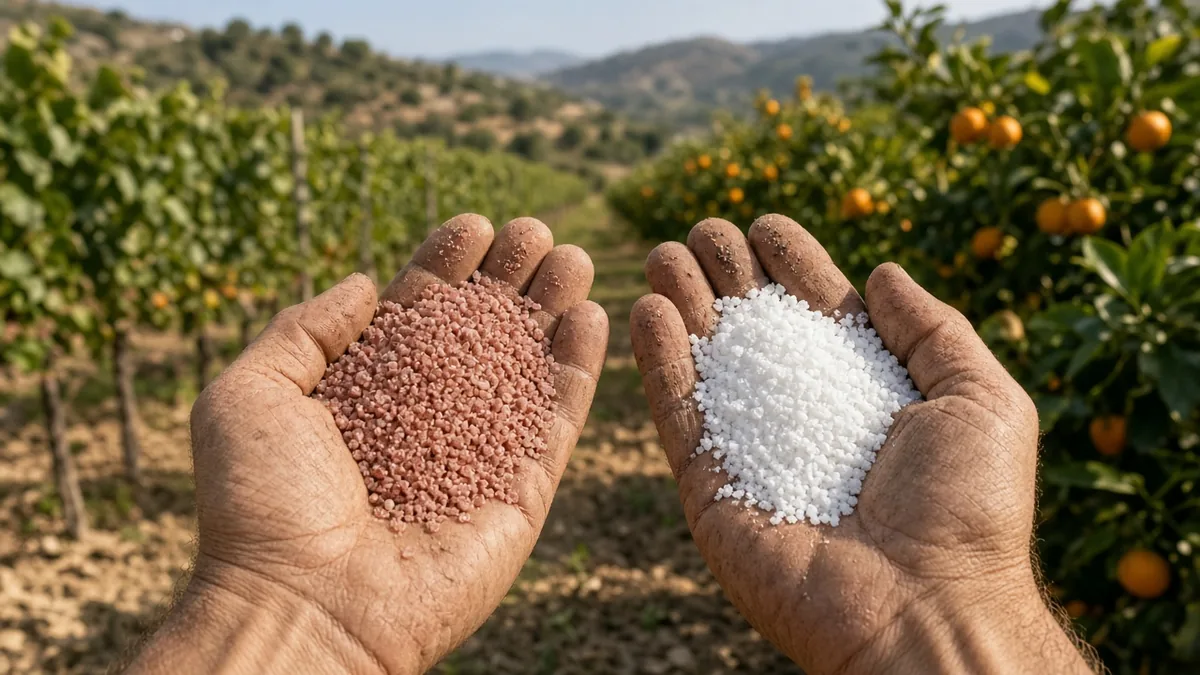
- Uses: Spring top-dressing in Black Sea hazelnut orchards (shoot growth and nut cluster formation stage), cereals, vegetables and vineyards.
- Advantages: Fast and balanced action, added calcium, a suitable option on acidic soils, lower risk of volatilisation losses than urea.
- Caution: The nitrate part can be leached by rain; avoid applying it before a heavy downpour. It should be stored away from heat and flammable materials.
- General rate range on the product page: 20–35 kg/da; in hazelnut, applying the nitrogen in two splits is recommended. For application timing, see the Hazelnut Fertilization Calendar.
Ammonium Sulphate (21% N, 24% S)
Ammonium Sulphate supplies a significant amount of sulphur in addition to nitrogen. Because its nitrogen is in ammonium form, it is leached more slowly than nitrate.
- Uses: Sunflower and cereals with a high sulphur requirement, tea gardens, alkaline (calcareous) soils.
- Advantages: Added sulphur (for protein synthesis and efficient use of nitrogen), helps balance the soil reaction on calcareous soils, a nitrogen form relatively resistant to leaching.
- Caution: It has an acidifying effect on the soil. Continuous, high-rate use on the already acidic soils of the Black Sea region can lower pH further; it should be used with pH monitoring. Details for tea gardens: Tea Garden Fertilization Guide.
- General rate range on the product page: 25–40 kg/da.
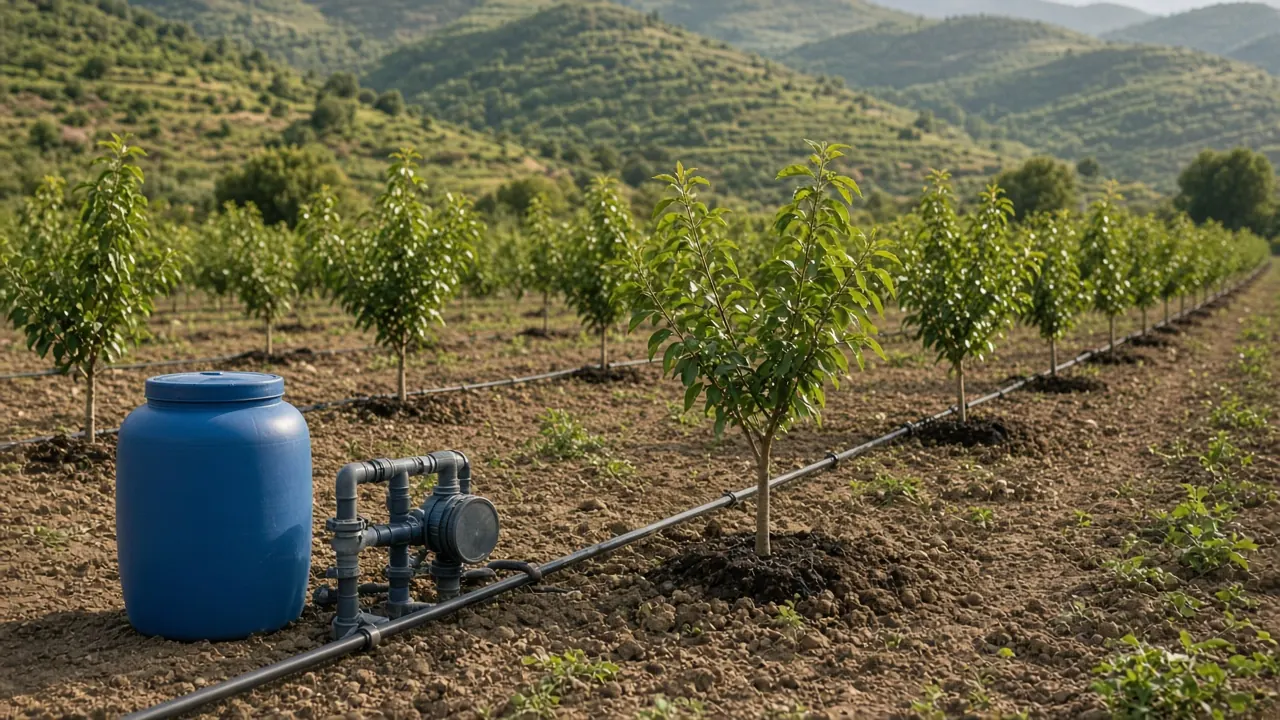
UAN 32 + ME – Liquid Nitrogen (32% N)
UAN 32 + ME is a liquid nitrogen fertilizer made from a solution of urea and ammonium nitrate in water; it contains nitrogen in three forms together (urea, ammonium, nitrate) and has added micronutrients.
- Uses: Drip irrigation, sprinkler and greenhouse applications; foliar application with appropriate dilution.
- Advantages: Uniform distribution, easy dosing, small and frequent doses through fertigation.
- Caution: A compatibility check should be carried out before mixing with other products. Because it can crystallise in the cold, it should be stored protected from frost.
- General rate range on the product page: 5–10 L/da (20-litre pack).
A Nitrogen-Rich Compound Option: NPK 25-5-10
When some phosphorus and potassium are also to be supplied alongside nitrogen, NPK 25-5-10 can be considered. It supports green growth in cereals, maize, turf and forage crops, and can also be used in tea gardens depending on the analysis. The general rate range on the product page is 25–40 kg/da. For types of NPK fertilizer: What Is NPK Fertilizer?
Comparison Table
| Property | Urea 46 | CAN 26 | Ammonium Sulphate | UAN 32 + ME |
|---|---|---|---|---|
| Nitrogen content | 46% N | 26% N | 21% N | 32% N |
| Additional nutrient | – | 8% CaO | 24% S | Micronutrients |
| Physical form | Granular | Granular | Crystalline/granular | Liquid |
| Speed of action | Medium (conversion required) | Fast | Medium | Fast |
| Effect on soil pH | Slightly acidifying | Low | Markedly acidifying | Slightly acidifying |
| Main loss risk | Volatilisation (if left on the surface) | Leaching (nitrate part) | Low leaching | Depends on application |
| Best suited to | Economical top-dressing | Acidic soils, hazelnut | Calcareous soil, sulphur requirement, tea | Drip irrigation, greenhouses |
| Product page rate range | 15–25 kg/da | 20–35 kg/da | 25–40 kg/da | 5–10 L/da |
Which Nitrogen Fertilizer for Which Situation?
| Situation | Preferred option | Why? |
|---|---|---|
| Hazelnut on acidic Black Sea soils | CAN 26 | Contains calcium, low acidifying effect, fast-acting |
| Tea garden | Ammonium Sulphate, NPK 25-5-10 (with pH monitoring) | Tea likes acidic soil; added sulphur |
| Cereals and sunflower on calcareous soils | Ammonium Sulphate, Urea (incorporated into the soil) | Added sulphur, balancing the soil reaction |
| Large fields, economical top-dressing | Urea 46 | High nitrogen, economical per unit of nitrogen |
| Drip-irrigated orchard, greenhouse | UAN 32 + ME | Liquid, uniform, suitable for fertigation |
We explain the effect of soil pH on fertilizer choice in detail in our article Soil pH and Fertilizer Efficiency. For a nitrogen programme specific to wheat, see our article Wheat Fertilization Techniques.
Tips for Correct Application
- Split the rate: Divide the total nitrogen rate across the periods when the crop needs it.
- Timing: Spread fertilizer when there is no wind; where possible, incorporate urea into the soil or time it just before light rain or irrigation. Do not apply when a heavy downpour is expected, especially on sloping land.
- Keep it off the leaves: Granules landing on wet leaves can cause scorch.
- Apply in the right place: Over the canopy drip line in orchards and evenly across fields; calibrate the spreader.
- Take care when mixing: Do not mix urea and CAN in advance and leave them standing; the mixture quickly absorbs moisture. For storage: Fertilizer Storage Conditions.
- Read the label: To convert the percentage on the bag into pure nitrogen, see How to Read a Fertilizer Label.
Conclusion
The "best nitrogen fertilizer" is not a single product; it is the one that best suits your crop, your soil pH and your application method. Urea is an economical nitrogen source, CAN is a fast and safe option on acidic soils, ammonium sulphate stands out where sulphur is needed and on calcareous soils, and UAN 32 for drip irrigation and greenhouses. For the right rate, have a soil analysis done first.
Let us work out together which nitrogen fertilizer suits you. Get a quote from the AKFE Gübre team for products and quantities; delivery to all 81 provinces of Turkey — contact: +90 462 325 05 41 / +90 531 474 78 85, satis@akfe.com.tr.
Frequently Asked Questions
What types of nitrogen fertilizer are there?
The most common nitrogen fertilizers are urea (46% N), CAN 26 – calcium ammonium nitrate (26% N, 8% CaO), ammonium sulphate (21% N, 24% S) and liquid UAN 32 (32% N). Nitrogen-rich compound fertilizers (e.g. NPK 25-5-10) are also used as nitrogen sources.
Is urea or CAN better?
It depends on the situation. Urea contains more nitrogen and is usually economical, but volatilisation losses can occur if it is not incorporated into the soil. CAN acts faster, contains calcium and has an advantage on acidic soils. CAN is often preferred in hazelnut orchards in spring.
Which crops is ammonium sulphate used on?
It is preferred for sunflower and cereals with a high sulphur requirement, in tea gardens and on calcareous soils. Because it acidifies the soil, it should be used with pH monitoring on acidic soils.
What is CAN 26 fertilizer used for?
CAN 26 supplies both fast-acting nitrate and longer-lasting ammonium nitrogen, and also contains calcium. It supports shoot growth and is used as a spring top-dressing in Black Sea hazelnut orchards, as well as in cereals, vegetables and vineyards.
What is UAN 32 and how is it used?
UAN 32 is a liquid nitrogen fertilizer containing 32% nitrogen. It is used in drip irrigation, sprinkler and greenhouse systems; foliar application is also possible with appropriate dilution. A compatibility check should be carried out before mixing with other products.
Which nitrogen fertilizer should be used on acidic soil?
On acidic soils, CAN 26 is usually the more suitable option because it contains calcium and has a low acidifying effect. Since ammonium sulphate can acidify the soil further, it should be used with pH monitoring on these soils.