What Is NPK Fertilizer? The Roles of Nitrogen, Phosphorus and Potassium and Choosing the Right NPK
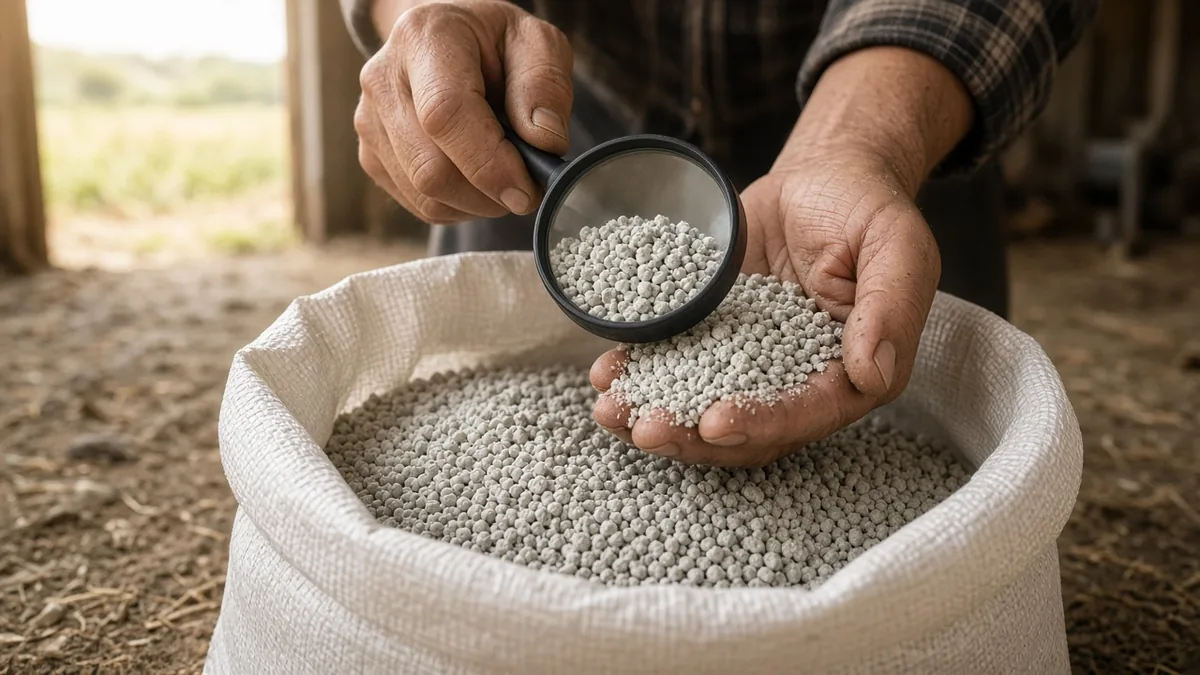
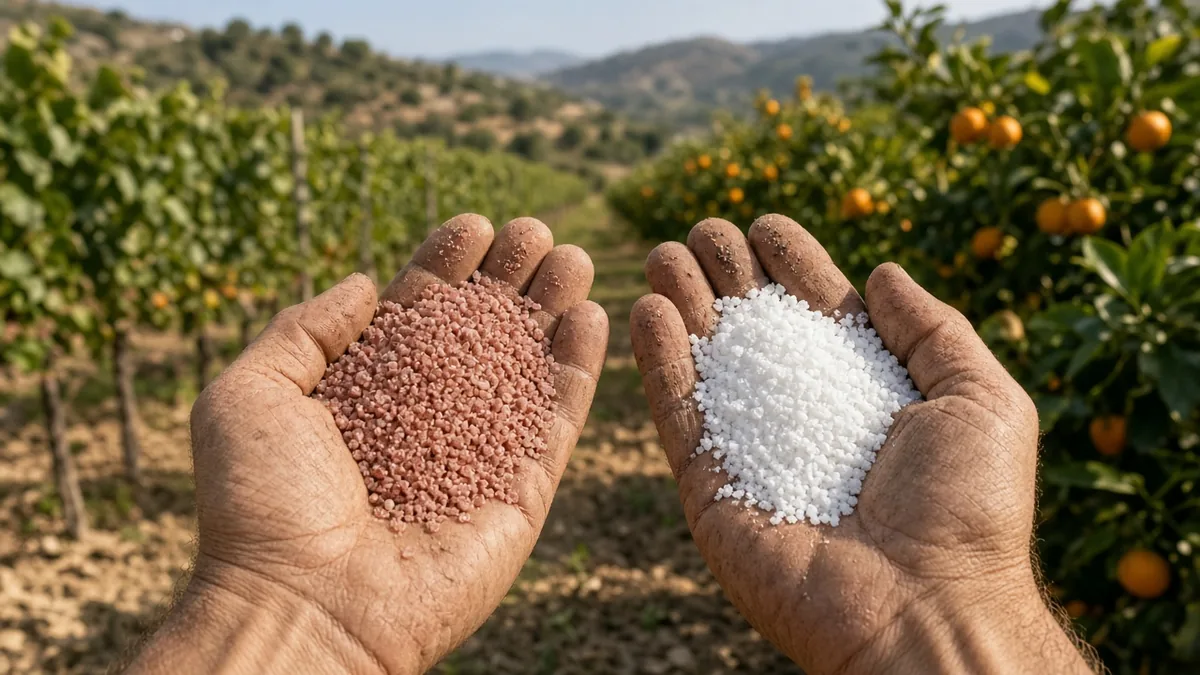
Short answer: NPK fertilizer is a fertilizer that supplies the three primary nutrients plants need most — nitrogen (N), phosphorus (P) and potassium (K) — together. Nitrogen supports leaf and shoot growth, phosphorus supports root development and flowering, and potassium supports fruit quality and resilience. On the market you will find balanced (e.g. 15-15-15), phosphorus-rich (e.g. 12-25-12, 13-24-12) and nitrogen-rich (e.g. 25-5-10) NPK fertilizers. Which one to choose depends on the crop, its growth stage and a soil analysis.
"NPK" is the term you meet most often at a fertilizer dealer or on a price list. So what exactly is NPK fertilizer, why is it so widely used, and can the same NPK be applied to every crop? In this article we explain what NPK is, the roles of the three primary nutrients in the plant, and in which situations different NPK formulations are preferred.
For a detailed look at how to read the numbers on the bag and how to calculate the rate per decare, see our article How to Read a Fertilizer Label.
What Does NPK Mean?
NPK is made up of the chemical symbols of the three primary plant nutrients:
- N – Nitrogen
- P – Phosphorus (expressed as P2O5 in fertilizers)
- K – Potassium (expressed as K2O in fertilizers)
The three numbers in a fertilizer's name always show the percentage by weight of these nutrients in the same order. For example, a "15-15-15" fertilizer contains 15% N, 15% P2O5 and 15% K2O. SO3 next to the numbers indicates sulphur, and ME indicates added micronutrients.
The Roles of the Three Primary Nutrients
| Nutrient | Main role in the plant | Common deficiency symptom |
|---|---|---|
| Nitrogen (N) | Leaf, shoot and green growth; formation of chlorophyll and protein | Yellowing of older leaves, stunted growth |
| Phosphorus (P) | Root development, flowering, seed and fruit formation, energy transfer | Slow growth, purplish leaves, weak roots |
| Potassium (K) | Fruit quality, sugar accumulation, water balance, drought and disease resistance | Yellowing and scorching of older leaf margins |
Nitrogen (N)
Nitrogen is the plant's growth engine. Demand rises especially during periods of rapid growth. Because it is easily lost from the soil, it is usually applied in split doses. More details: The Importance of Nitrogen Fertilizers in Agriculture.
Phosphorus (P)
Phosphorus is critical for establishing the root system and for flower and fruit formation. It moves very little in the soil, so it should be applied at sowing or, in orchards, at the start of the season, close to the root zone. On both strongly acidic and calcareous soils it can become fixed and unavailable.
Potassium (K)
Potassium is known as the "quality nutrient". It affects fruit size, colour, taste and shelf life. For chloride-sensitive crops the choice of potassium source matters; we cover this in our article Potassium Chloride or Potassium Sulphate?.
Compound, Blended and Straight Fertilizers
- Compound (complex) NPK fertilizer: Nitrogen, phosphorus and potassium are contained within the same granule. Because every granule carries the same nutrient ratio, it spreads evenly across the field and the nutrients do not segregate during spreading.
- Blended fertilizer: Made by physically mixing granules of different straight fertilizers. If the granule sizes differ, they can segregate during spreading.
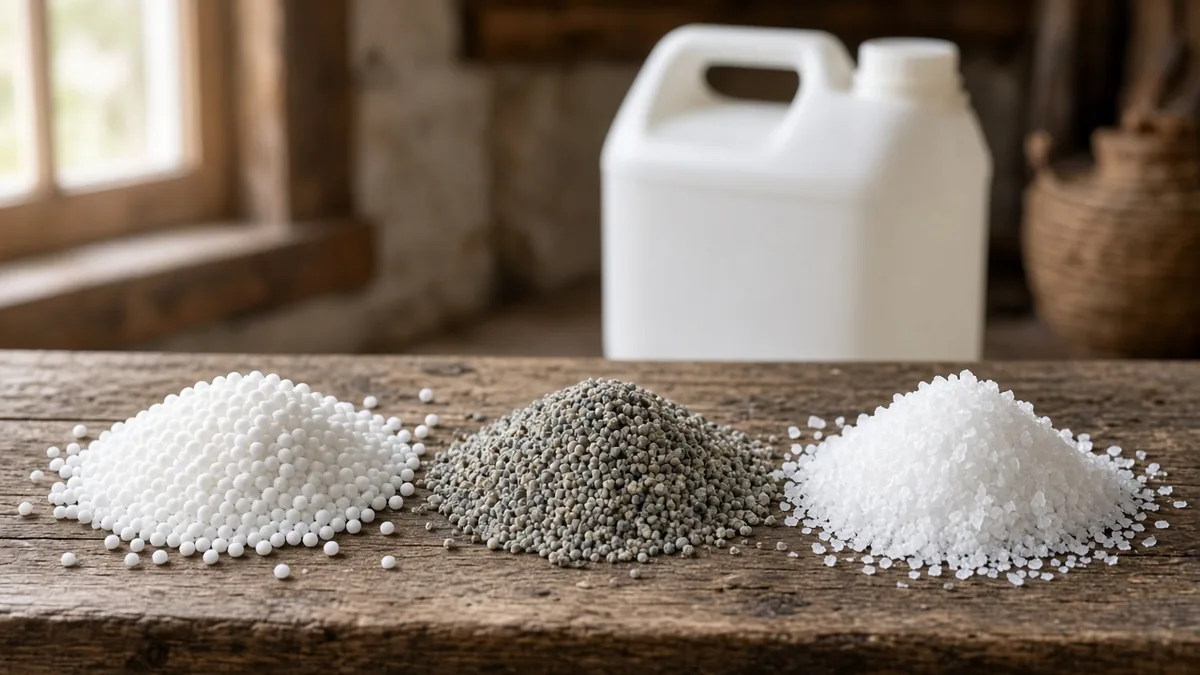
- Straight fertilizer: Contains only one primary nutrient (e.g. urea supplies nitrogen only; potassium sulphate supplies potassium and sulphur). It is used to correct a specific deficiency in a targeted way or for top-dressing.
- NP fertilizer: Two-nutrient fertilizers without potassium (e.g. DAP 18-46-0, NP 20-20-0). They can be preferred as basal fertilizers where soil potassium is sufficient.
Types of NPK Fertilizer and Their Uses
NPK fertilizers serve different purposes depending on their nutrient ratios:
Balanced NPK (e.g. 15-15-15)
Supplies the three primary nutrients in equal proportions. If the soil analysis shows no marked imbalance, it is used as a general-purpose basal fertilizer.
- NPK 15-15-15+(20SO3)+ME: Contains 20% SO3 (about 8% S) and 1% zinc; can be used as a basal fertilizer for field crops, fruit, vineyards and vegetables, and for the late-winter application in hazelnut depending on the analysis results.
- NPK 15-15-15+(15SO3)+ME: For cereals, maize, sunflower, vegetables, fruit and vineyards; the general rate range on the product page is 30–50 kg/da.
Phosphorus-rich NPK (e.g. 12-25-12, 13-24-12)
Comes to the fore in periods when root development, flower bud formation and fruit set are important.
- NPK 12-25-12+(15SO3)+ME: Used after harvest in hazelnut, in late winter in orchards, and in vineyards.
- NPK 13-24-12+(10SO3): A basal fertilizer for orchards, vineyards and vegetables; the general rate range on the product page is 30–40 kg/da.
Nitrogen-rich NPK (e.g. 25-5-10)
Used for crops where green growth is the priority.
- NPK 25-5-10: For cereals, maize, turf and forage crops; because of its nitrogen-rich composition, it can also be considered for tea gardens depending on the analysis. The general rate range on the product page is 25–40 kg/da.
NP fertilizers (without potassium)
- DAP 18-46-0: A basal fertilizer at sowing for cereals, sunflower, maize and vineyards; the general rate range on the product page is 15–25 kg/da.
- NP 20-20-0+(12SO3)+ME and NP 15-36-0: For a nitrogen-phosphorus start on soils where potassium is sufficient.
Quick comparison table
| Fertilizer type | Example | Main purpose | Typical use |
|---|---|---|---|
| Balanced NPK | 15-15-15 | General basal nutrition | Field crops, vegetables, fruit, vineyards |
| Phosphorus-rich NPK | 12-25-12, 13-24-12 | Roots, flowering, fruit set | Hazelnut after harvest, fruit, vineyards, vegetables |
| Nitrogen-rich NPK | 25-5-10 | Green growth, shoots | Cereals, maize, turf, forage crops, tea |
| NP (without potassium) | 18-46-0, 20-20-0 | Phosphorus + nitrogen at sowing | Cereals, sunflower, maize |
Which NPK for Which Crop?
To choose the right NPK you need to answer three questions:
- What is missing in the soil? A soil analysis shows phosphorus and potassium levels. If potassium is high, an NP fertilizer makes more sense; if phosphorus is low, a phosphorus-rich NPK does.
- What stage is the crop at? Phosphorus-rich basal fertilizers stand out at sowing and planting, and nitrogen top-dressings during rapid growth.
- Does the crop have any particular sensitivity? For chloride-sensitive crops (tobacco, citrus, grapes, hazelnut, etc.) pay attention to the potassium source, and on acidic soils to the effect on pH.
For region- and crop-specific programmes, see our articles Hazelnut Fertilization Calendar, Tea Garden Fertilization Guide and Wheat Fertilization Techniques.
How Is NPK Fertilizer Applied?
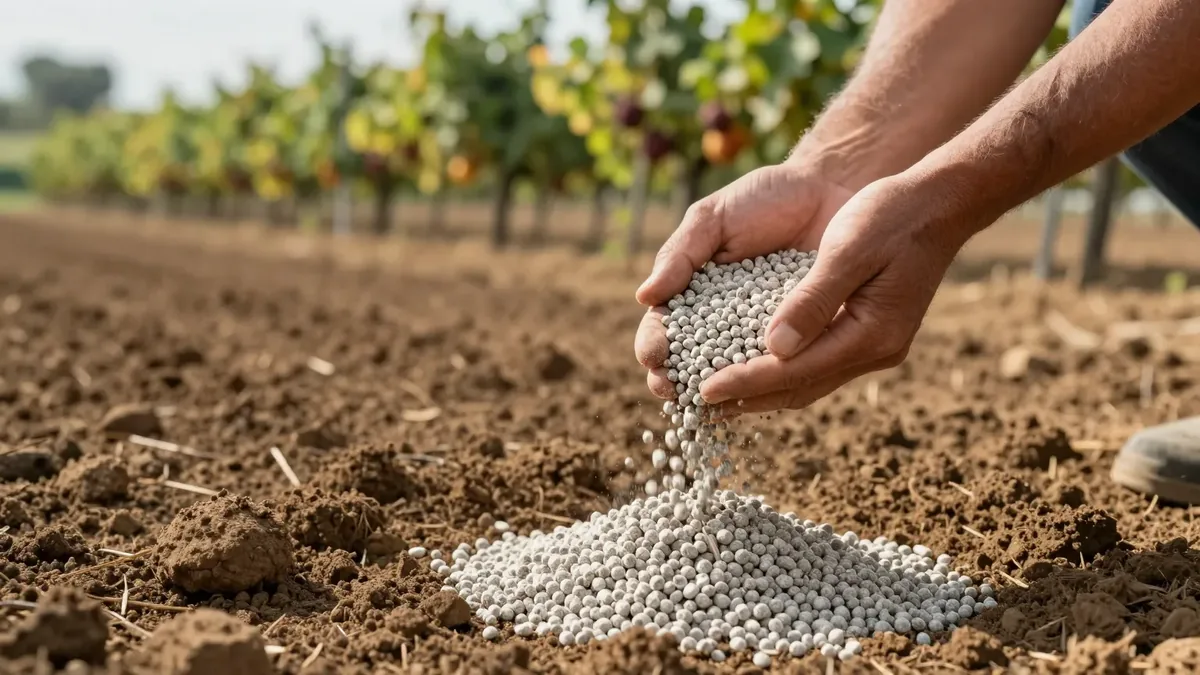
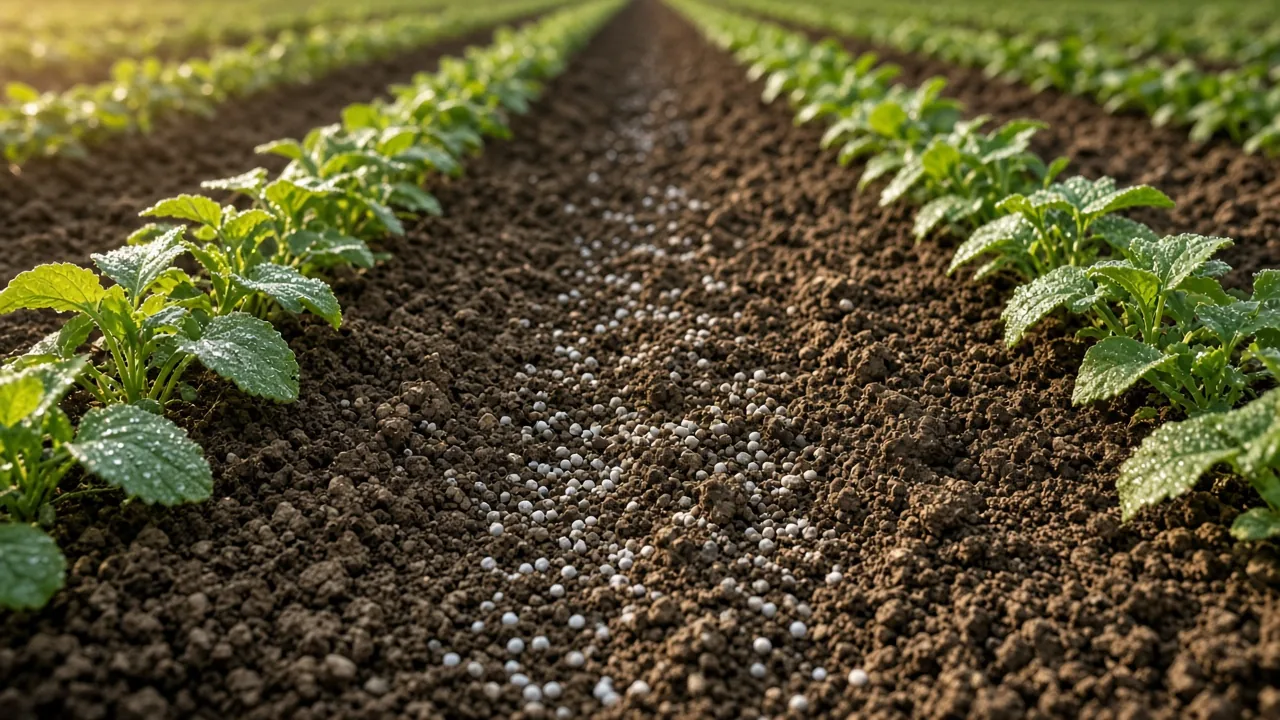
- As a basal fertilizer: In field crops, it is incorporated into the soil before sowing or placed beside/below the seed with a seed drill. The fertilizer should not come into direct contact with the seed.
- In orchards: Spread over the canopy drip line, where roots are concentrated, and lightly hoed into the soil where possible.
- Timing: Because phosphorus and potassium move slowly, NPK fertilizers are usually applied at the start of the season; the nitrogen requirement is topped up separately with top-dressing during the season.
- Even distribution: Calibrating the spreader prevents striped differences in growth across the field.
Conclusion
NPK fertilizer is the cornerstone of plant nutrition, but the idea that "one NPK suits every crop" is wrong. Balanced, phosphorus-rich and nitrogen-rich formulations meet different needs. The best choice is made by considering the soil analysis, the crop's growth stage and your production goal together.
Not sure which NPK formulation suits your field or orchard? Consult the AKFE Gübre team; we will prepare a quote for the products and quantities that match your analysis results. Delivery to all 81 provinces of Turkey — contact: +90 462 325 05 41 / +90 531 474 78 85, satis@akfe.com.tr.
Frequently Asked Questions
What is NPK fertilizer used for?
NPK fertilizer supplies nitrogen, phosphorus and potassium to the plant together. Nitrogen supports leaf and shoot growth, phosphorus supports root and flower formation, and potassium supports fruit quality and resilience.
Which crops is NPK fertilizer applied to?
It is used on almost every cultivated crop, including cereals, maize, sunflower, vegetables, fruit, vineyards, hazelnut and tea. However, the formulation should be chosen according to the crop and growth stage: balanced, phosphorus-rich or nitrogen-rich.
What is the difference between compound and blended fertilizer?
In a compound fertilizer, nitrogen, phosphorus and potassium are in the same granule, and every granule carries the same nutrient ratio. In a blended fertilizer, different fertilizer granules are physically mixed and can segregate during spreading.
What is 15-15-15 fertilizer used for?
15-15-15 is a balanced NPK fertilizer; it supplies the three primary nutrients in equal proportions (15% N, 15% P2O5, 15% K2O). If the soil shows no marked imbalance, it is used as a general-purpose basal fertilizer for many crops.
When should NPK fertilizer be applied?
It is usually applied as a basal fertilizer before sowing or planting, or at the start of the season in orchards. In hazelnut, phosphorus-rich NPK is applied after harvest or in late winter. The nitrogen requirement is topped up with top-dressing during the season.
Can the same NPK fertilizer be applied to every crop?
No. Crops and soils have different needs. A phosphorus-rich formulation is better on soil low in phosphorus, an NP fertilizer on soil with sufficient potassium, and a nitrogen-rich formulation for crops where green growth is the priority. The decision should be based on soil analysis.