Fertilizer Trends in Turkish Agriculture: Key Approaches for 2025–2026
Short answer: The general trend in fertilization in Turkish agriculture is towards "better fertilization" rather than "more fertilizer". The main themes are: fertilizer programmes based on soil analysis, the spread of fertigation and liquid fertilizers, fertilizer efficiency through split applications, growing attention to sulphur and micronutrient needs, organic matter and soil health, sustainability, and cost management that calculates the fertilizer budget per unit of nutrient. This article focuses not on specific statistics but on general trends observed in the field.
The weight of fertilizer costs in farm budgets, changing climate conditions, concerns about water resources and demand for quality produce have changed how growers look at fertilizer in recent years. The question is no longer just "which fertilizer?" but "how much, when and how?". In this article we look at the fertilization trends that stand out across different production areas in Turkey, from field crops to hazelnut and tea, and from vineyards to greenhouses, and at what they mean in practice for farmers.
1. Fertilization Based on Soil Analysis
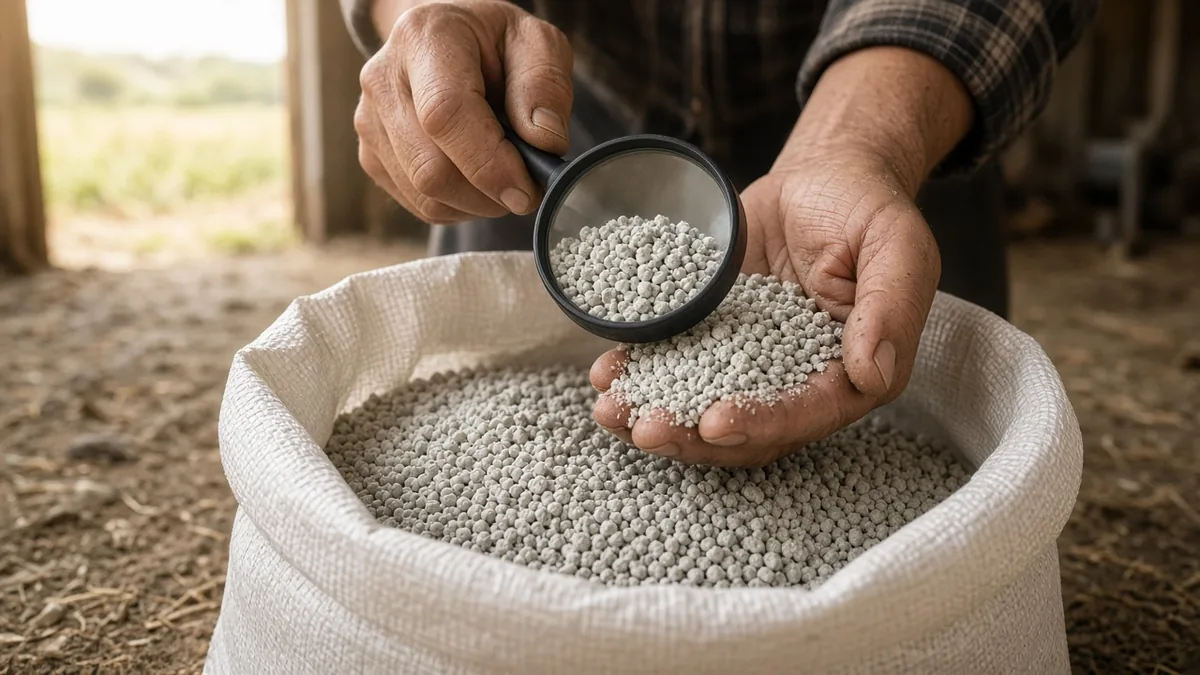
The most fundamental and perhaps most important trend is building the fertilizer programme on analysis rather than guesswork. Soil analysis is the most reliable way to avoid unnecessary fertilizer costs, detect missing nutrients in time and identify pH and salinity problems. Especially in perennial orchards (hazelnut, tea, fruit, vineyards), regular analysis and tracking changes over the years is becoming increasingly common.
- Sampling method: How to Do a Soil Analysis
- The effect of pH on fertilizer efficiency: Soil pH and Fertilizer Efficiency
2. Fertigation and Liquid Fertilizers
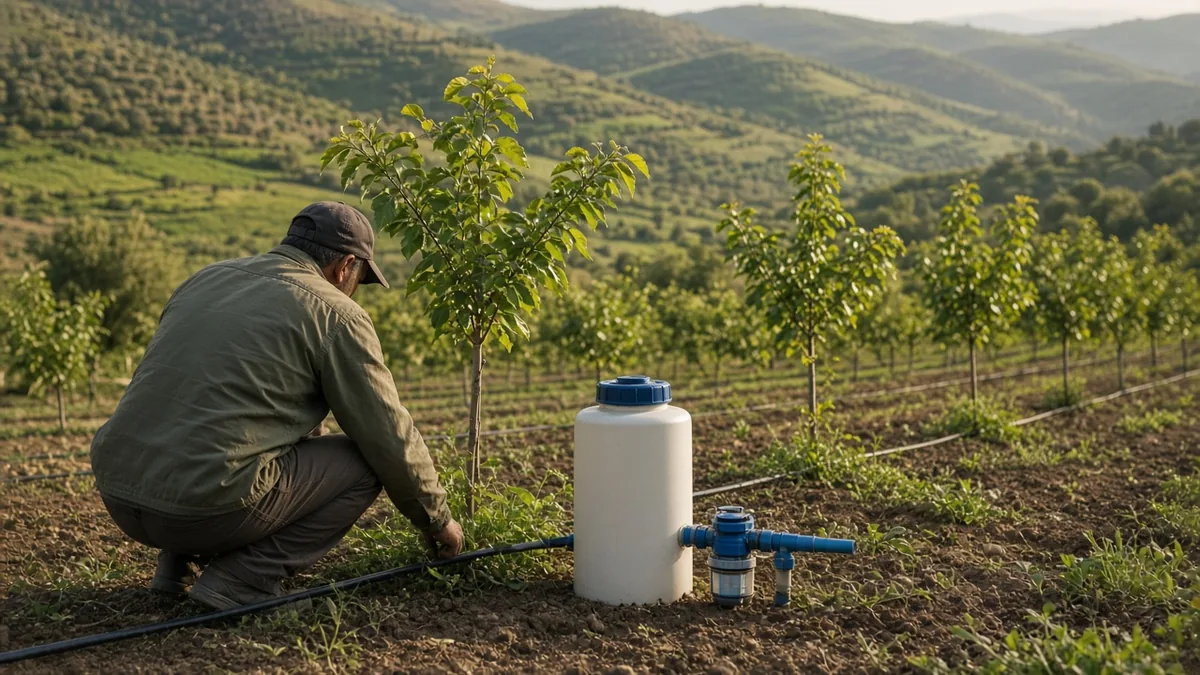
With the spread of drip irrigation in orchards, vineyards, greenhouses and vegetable fields, fertigation — applying fertilizer together with irrigation water — is increasingly preferred. The advantages of fertigation:
- Nutrients reach the root zone directly.
- The total rate can be divided into small, frequent doses that better follow the crop's demand curve.
- Labour and machinery passes are reduced.
This trend is also increasing interest in liquid and water-soluble products. For example, UAN 32 + ME, as a liquid nitrogen source, is suitable for drip irrigation, sprinkler and greenhouse applications (general rate range on the product page: 5–10 L/da). Phosphoric Acid, in addition to supplying phosphorus in fertigation programmes, helps reduce lime and deposit build-up in drip lines by lowering the pH of the irrigation water; because it is corrosive, it must always be used diluted and with protective equipment.
Caution: In fertigation, a compatibility check should be carried out before products are mixed, the irrigation water should be analysed and the system should be cleaned regularly.
3. Split Applications and Fertilizer Efficiency
The "lots of fertilizer in one go" approach is giving way to split applications. Because nitrogen in particular is easily lost from the soil through volatilisation, leaching and denitrification, dividing the total rate across the periods when the crop needs it protects both yield and budget. This approach is summed up by the principles of "right source, right rate, right time, right place".
- How nitrogen is lost and how to use it efficiently: The Importance of Nitrogen Fertilizers in Agriculture
- Split nitrogen in cereals: Wheat Fertilization Techniques
- Two-split spring nitrogen in hazelnut: Hazelnut Fertilization Calendar
4. Growing Attention to Sulphur and Micronutrients
Alongside nitrogen, phosphorus and potassium, the role of sulphur (S) and micronutrients such as zinc, boron and iron in yield and quality is becoming better understood. High-yielding varieties and intensive production can remove these nutrients from the soil more quickly. As a result, fertilizers containing sulphur and micronutrients are increasingly preferred:
| Product | Additional content | Example uses |
|---|---|---|
| NPK 15-15-15+(20SO3)+ME | 20% SO3 (≈8% S), 1% Zn | Field crops, fruit, vineyards, vegetables |
| NP 20-20-0+(12SO3)+ME | 12% SO3, micronutrients | Cereals and industrial crops |
| Ammonium Sulphate | 24% S | Sunflower, cereals, tea |
| Potassium Sulphate | 18% S, chloride-free | Hazelnut, vineyards, citrus, apple |
For the meaning of SO3 and ME on the label, see our article How to Read a Fertilizer Label.
5. Quality-Oriented Fertilization
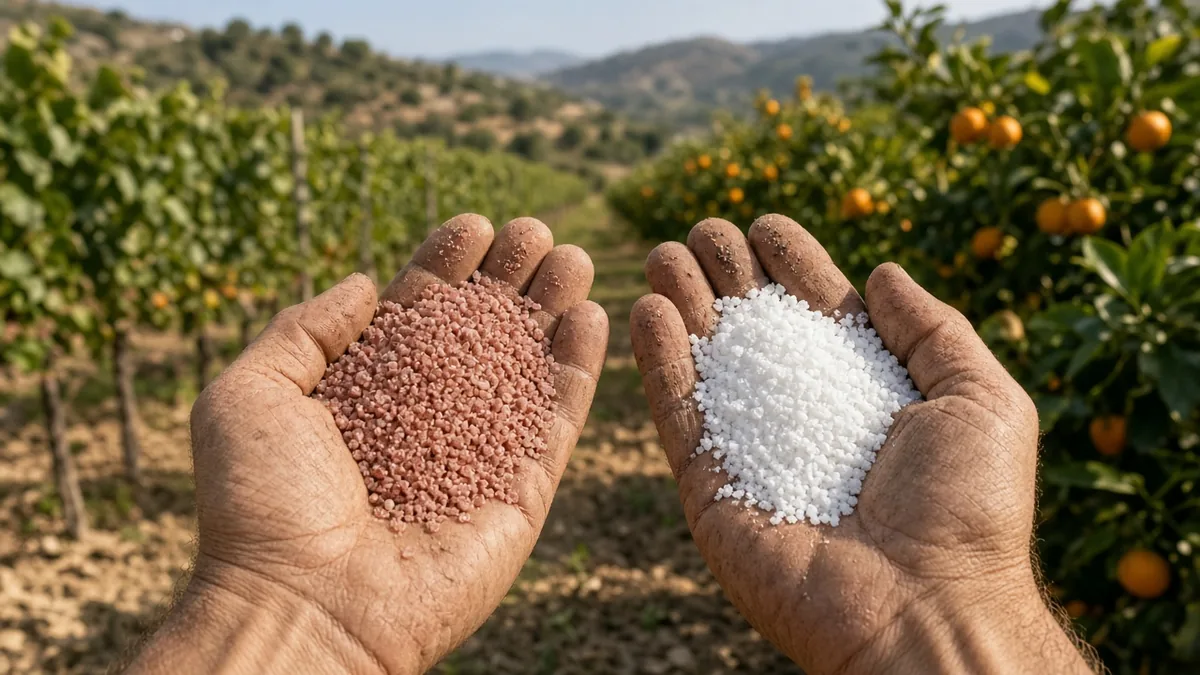
For export-oriented produce and in fruit growing, not only yield but also quality (kernel fill, colour, sugar, shelf life) is decisive. This is increasing interest in chloride-free potassium sources for chloride-sensitive crops, in potassium and calcium nutrition, and in balanced programmes. Related reading: Potassium Chloride or Potassium Sulphate?
6. Organic Matter and Soil Health
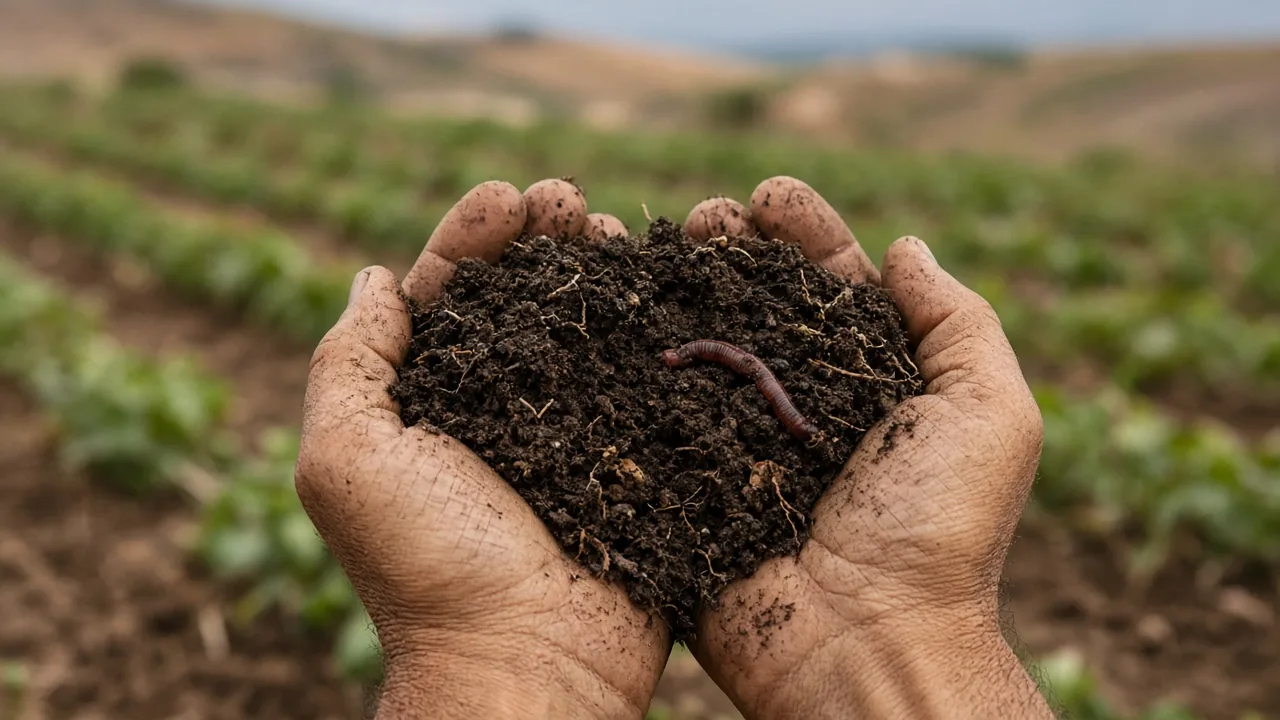
On intensively cultivated soils with depleted organic matter, fertilizer efficiency also falls. That is why farmyard manure, compost, green manuring, returning crop residues to the soil and soil conditioners are increasingly discussed. Products such as Humic Acid (general rate range on the product page: 2–4 kg/da) do not replace mineral fertilizer, but they can complete the programme by supporting soil structure and nutrient uptake. On the acidic soils of the Black Sea region, pH management (liming based on analysis where necessary) is an integral part of soil health.
7. Sustainability and Protection of Water Resources
Fertilizer applied in excess and at the wrong time can reach groundwater and streams, particularly as nitrate. As awareness of water resources grows, practices such as:
- applying only as much fertilizer as is needed,
- not spreading fertilizer on sloping land before heavy rain,
- reducing volatilisation losses by incorporating urea into the soil,
- storing fertilizer in dry, safe conditions (Fertilizer Storage Conditions)
are coming to the fore for both the environment and the farm budget.
8. Cost Management: Nutrient Cost, Not Bag Price
Pressure on fertilizer budgets is leading growers to buy more consciously. Habits that stand out:
- Comparison per unit of nutrient: Calculating the cost of 1 kg of N, P2O5 or K2O instead of the bag price.
- Planned purchasing: Determining needs in advance from the analysis results and sourcing on time according to the application calendar.
- Avoiding unnecessary applications: Not reapplying nutrients that are already sufficient in the soil.
- Getting quotes directly from the manufacturer and planning logistics around the season.
For other points to consider when making a purchase decision, see our article 10 Key Points to Consider When Choosing Fertilizer.
9. Digital Tools and Record Keeping
Tools such as weather apps, field record books, GPS-assisted fertilizer spreaders and sensor-based systems are becoming widespread, especially on large farms. Even for small farms, noting which plot received how much of which fertilizer, and when provides very valuable information when building the next year's programme.
Summary of the Trends
| Trend | What it means in practice for farmers |
|---|---|
| Soil analysis | Building the programme on analysis and repeating it every 2–3 years |
| Fertigation and liquid fertilizer | Small, frequent doses through drip irrigation; compatibility and water analysis |
| Split application | Dividing nitrogen across the periods of need |
| Sulphur and micronutrients | Considering products with SO3 and ME based on analysis |
| Quality-oriented fertilization | Chloride-free potassium for chloride-sensitive crops, balanced nutrition |
| Soil health | Organic matter, pH management, soil conditioners |
| Sustainability | Reducing losses, protecting water resources |
| Cost management | Comparison per unit of nutrient, planned purchasing |
Conclusion
Fertilization in Turkish agriculture is moving in a more conscious and measured direction. The common denominator is applying fertilizer according to the real needs of the soil and the crop, at the right time and in a way that reduces losses. This approach protects yield and quality and makes every lira of the fertilizer budget work harder.
Let us plan your new season programme together based on your analysis results. Get a quote from the AKFE Gübre team for the products and quantities you need; delivery to all 81 provinces of Turkey — contact: +90 462 325 05 41 / +90 531 474 78 85, satis@akfe.com.tr.
Frequently Asked Questions
What are the main fertilization trends in Turkish agriculture?
The main trends are fertilization based on soil analysis, fertigation and liquid fertilizers, split applications, the use of sulphur and micronutrients, organic matter and soil health, sustainability, and cost management per unit of nutrient.
What is fertigation?
Fertigation is the application of fertilizer to the crop with irrigation water, usually through a drip irrigation system. Nutrients reach the root zone directly, and the total rate can be divided into small, frequent doses. Product compatibility and water analysis are important.
Is liquid or granular fertilizer better?
Neither is absolutely better than the other. Liquid fertilizers allow uniform, fast application in systems such as drip irrigation and greenhouses; granular fertilizers are practical and economical for basal and top-dressing. The choice depends on the system, the crop and the soil analysis.
How can I reduce fertilizer costs?
First, have a soil analysis done to avoid unnecessary fertilization. Compare products by cost per unit of nutrient instead of bag price, plan purchases according to the application calendar, and reduce losses by splitting nitrogen applications.
What does sustainable fertilization mean?
It means applying as much fertilizer as the crop needs, at the right time and in a way that minimises losses. Soil analysis, split application, protecting organic matter and preventing fertilizer from reaching water resources are the foundations of this approach.
Why are fertilizers with sulphur and micronutrients becoming more common?
In high-yield production, nutrients such as sulphur and zinc can be removed from the soil more quickly, and their deficiency can limit yield and quality. For this reason, fertilizers containing SO3 and ME are increasingly considered based on soil analysis.